Zithromax
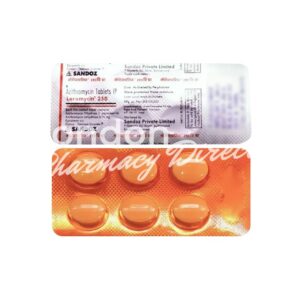
In brief
- Zithromax (azithromycin) is a prescription-only medicine (POM) in the UK.
- Zithromax is a macrolide antibiotic used to treat bacterial infections such as chest infections, pneumonia, sinusitis, skin and soft tissue infections, otitis media, and some sexually transmitted infections. It works by inhibiting bacterial protein synthesis, stopping bacteria from growing and multiplying.
- The usual dose depends on the infection: for example, 500 mg on day 1 followed by 250 mg daily for 4 days for many respiratory and skin infections, 500 mg daily for 3 days for sinusitis, or a single 1,000 mg dose for certain STIs. Children are dosed by body weight.
- It is usually taken as film-coated tablets, oral suspension, or, in hospital settings, as intravenous powder for reconstitution.
- Zithromax typically starts working within a few hours, although improvement in symptoms is often noticed after 1–2 days.
- The antibiotic remains active in the body for several days, which is why short courses of 3–5 days are common and some effects continue after the last dose.
- Alcohol is best avoided or limited while taking Zithromax, as it can worsen stomach upset and may make side effects such as nausea, dizziness, and diarrhoea more noticeable.
- The most common side effects are diarrhoea, nausea, abdominal pain, vomiting, headache, dizziness, and sometimes a mild rash or altered taste.
- Would you like to try Zithromax without a prescription?
Basic Zithromax information
- INN (international nonproprietary name): Azithromycin
- Brand names available in the United Kingdom: Zithromax
- ATC code: J01FA10
- Forms and dosages: Film-coated tablet 250 mg, 500 mg; oral suspension 200 mg/5 mL; IV powder (hospital) 500 mg vial
- Manufacturers in the United Kingdom: Pfizer (Zithromax); generic azithromycin from other manufacturers
- Registration status in the United Kingdom: Prescription-only medicine (POM)
- OTC / Rx classification: Prescription-only medicine (POM)
How to use Zithromax safely day to day
Morning vs evening dosing
Worried about fitting treatment around a busy school run, a shift pattern, or caring for someone at home?
Azithromycin is usually taken at a consistent time each day, so it is easier to build into normal routines in the UK.
A simple plan tends to work best.
- Set a phone reminder for the same time each day.
- Link the dose to breakfast, tea-time, or bedtime.
- Keep the course somewhere visible, but safely out of children’s reach.
- Take it exactly as prescribed, because Zithromax is prescription-only in the UK.
- Never share tablets with anyone else, even if their symptoms sound similar.
Some people prefer mornings because it is easier to remember before the day gets busy.
Others prefer evenings because any mild stomach upset feels less disruptive after the day is done.
Either can be fine if the timing stays regular and matches the directions on the label.
Taking with or without meals
Can it be taken with a slice of toast or after a cuppa?
Yes, azithromycin tablets can often be taken with or without food.
If nausea is a problem, a light meal may help, and many people in the UK find it easier to take the dose with toast, yoghurt, or after a simple lunch or supper.
There is no need for a special diet while taking it.
The main point is not to stop early just because you feel better.
Symptoms can improve before the infection is fully treated, and finishing the course helps reduce the chance of the bacteria returning.
Who should be careful before starting treatment
Who should avoid it
Some people should not take this medicine at all, while others need a prescriber to review it carefully first.
- Known allergy to azithromycin.
- Allergy to other macrolide or ketolide antibiotics, such as clarithromycin, erythromycin, or telithromycin.
- Previous cholestatic jaundice or liver dysfunction caused by azithromycin.
- Severe liver disease.
- Severe renal impairment also needs extra caution, especially if kidney function is very poor.
- Heart rhythm problems, a history of QT prolongation, low potassium, or low magnesium need review by a GP, pharmacist, or prescriber.
- Myasthenia gravis should also be mentioned before treatment is started.
Those checks matter because the medicine is prescription-only and should be matched to the person, not just the infection name.
If a serious side effect is suspected, the Yellow Card scheme is the UK route for reporting it.
Activities to limit
Dizziness and headache can happen, even though they do not affect everyone.
Until it is clear how the medicine feels, it is sensible to be careful with driving, operating machinery, or any safety-critical work.
That includes ordinary UK situations such as commuting on the train after a night shift, driving to the nursery, or doing work that needs full concentration.
If you are caring for children or running a busy household, it is better to plan for a little extra margin while you see how your body responds.
How dosing usually works in the UK
General regimen
What does a typical course look like in practice?
Most acute infections are treated for three to five days, while some sexually transmitted infections may need a single dose.
Children are dosed by weight, so the prescriber must calculate the amount carefully.
The exact course depends on the condition, age, and formulation, and it should always follow NHS or GP direction rather than guesswork.
| Condition | Adults | Children | Usual course length |
|---|---|---|---|
| Community-acquired pneumonia | 500 mg on day 1, then 250 mg daily for 4 days | 10 mg/kg on day 1, then 5 mg/kg daily for 4 days | 5 days |
| Acute bacterial sinusitis | 500 mg daily for 3 days | Not standard | 3 days |
| Urethritis/cervicitis | Single 1,000 mg oral dose | Not indicated | Single dose |
| Otitis media | N/A | 10 mg/kg daily for 3 days, or 10 mg/kg as a single day regimen | 1 to 3 days |
Available UK forms include 250 mg and 500 mg tablets, oral suspension, and hospital IV powder.
The label should always match the prescribed regimen.
Special cases
Older adults usually do not need a dose adjustment unless there is severe kidney or liver impairment.
That said, severe renal impairment, especially very low filtration, and severe liver disease may mean the medicine should be avoided or used only with close monitoring.
The prescriber should always be told about kidney problems, liver problems, swallowing difficulties, and all regular medicines, including anything bought over the counter.
That includes a quick mention of liquid formulations if swallowing tablets is difficult, because azithromycin oral suspension may be the better fit in some situations.
Legal status and availability in the UK
Zithromax and generic azithromycin are prescription-only medicines (POM) in the UK.
In our online pharmacy, Zithromax is available without a prescription, with discreet delivery to the United Kingdom in 9–21 days.
What’s inside and how it works
Ingredients overview
The active ingredient is azithromycin, the INN, and the ATC code is J01FA10.
Zithromax products and generics contain the same active medicine, even when the box design, pack size, or manufacturer name changes.
In the UK, common forms include 250 mg and 500 mg film-coated tablets, oral suspension at 200 mg/5 mL, and hospital IV powder at 500 mg.
| Form | Strength | Usual UK setting |
|---|---|---|
| Film-coated tablet | 250 mg, 500 mg | Community pharmacy |
| Oral suspension | 200 mg/5 mL | Community pharmacy or paediatric use |
| IV powder | 500 mg vial | Hospital use |
Mechanism basics explained simply
Azithromycin is a macrolide antibiotic that stops bacteria from making proteins, which helps the immune system clear the infection.
It is used for bacterial infections, not viral colds or flu, and it will not treat fungal illness either.
That simple distinction matters because using an antibiotic when bacteria are not the cause can add side effects without helping recovery.
Which infections it is used for
Approved uses
Prescribers use azithromycin for selected bacterial infections, and the diagnosis has to fit the condition.
Common approved uses include community-acquired pneumonia, acute bacterial sinusitis, skin and soft tissue infection, urethritis or cervicitis, otitis media in children, and pharyngitis or tonsillitis in appropriate cases.
Not every cough, cold, or sore throat needs an antibiotic, and NHS antimicrobial stewardship means prescribers try to avoid unnecessary use.
| Condition | Age group | Usual course |
|---|---|---|
| Community-acquired pneumonia | Adults, children | 3 to 5 days |
| Acute bacterial sinusitis | Adults | 3 days |
| Skin and soft tissue infection | Adults | 5 days |
| Otitis media | Children | 1 to 3 days |
Use follows clinician advice, not guesswork.
Off-label uses in UK clinics
Some specialist uses can be off-label, but they should not be treated as routine self-treatment.
Azithromycin was also studied in some viral-associated respiratory infections during the early COVID-19 period, although it is not routinely recommended now for that purpose.
The main message is simple: it should be used only when there is a clear bacterial reason.
Things that can interact with it
Food interactions
Most people do not need to avoid major food groups while taking this antibiotic.
- A light meal can help if nausea appears.
- Alcohol is not a direct interaction, but it may worsen tummy upset or dehydration.
- Tea and coffee are not major interaction issues, though routine hydration is sensible during illness.
- Simple meals and regular fluids often make treatment easier to tolerate.
That is usually enough for day-to-day use, especially when recovery already feels tiring.
Drug conflicts
The biggest concern is medicines that can affect heart rhythm, especially those linked with QT prolongation.
Other macrolides or ketolides should also be checked, and the prescriber needs a full list of regular medicines, over-the-counter products, and herbal supplements.
If a suspected reaction happens, reporting through the Yellow Card scheme helps with UK safety monitoring.
Alternatives prescribers may choose
NHS prescribing alternatives
If azithromycin is not the best fit, prescribers may choose another antibiotic depending on the infection, allergy history, resistance pattern, and how well the person tolerates treatment.
- Clarithromycin: often used in similar situations, but interactions and tolerability need checking.
- Erythromycin: another macrolide option, though stomach upset can be an issue.
- Amoxicillin/clavulanate: useful for some infections where a different spectrum is needed.
- Doxycycline: used in some indications where it is suitable for the patient.
- Levofloxacin: reserved for selected cases because choice depends on clinical need and risk.
The best choice is not about which name sounds strongest, but which one fits the infection and the person.
When an alternative may be better
Azithromycin may not suit someone with a known allergy, QT risk, severe liver disease, or troublesome side effects.
In those cases, the alternative is a prescriber decision rather than an over-the-counter swap.
How it is regulated in the UK
MHRA approval and NHS prescribing framework
Azithromycin is prescription-only in the UK and used within NHS or private prescribing frameworks.
Prescribers and pharmacists check indication, dose, allergies, and suitability before supply.
| What patients should know | What prescribers check |
|---|---|
| Prescription-only medicine | Correct diagnosis |
| Different strengths and forms exist | Allergy and previous reactions |
| Course length must be completed | Kidney, liver, and heart rhythm risks |
That is why a pharmacy label matters as much as the box itself.
Packaging, brands, and generics
UK patients may see Zithromax or generic azithromycin on the pack, and the leaflet or packaging style can vary by manufacturer.
Zithromax is made by Pfizer; generic azithromycin is supplied by other manufacturers.
Questions people ask most often
Common UK patient questions
Can I take it with food? Yes, it can often be taken with or without food, and a light meal may help if nausea appears.
What if I miss a dose? Take it as soon as you remember if it is not too close to the next dose, and do not double up.
Why isn’t it for my cold? Because it treats bacterial infection, not viral colds or flu.
Can I drive on it? Be cautious until you know whether dizziness or headache affects you.
Quick reassurance points
Most side effects are mild, but severe symptoms need urgent review.
Do not take two doses at once after a missed one, and get advice promptly if you develop breathing difficulty, chest pain, fainting, or a severe rash.
How to use it properly
UK pharmacist counselling style
The most important advice is simple.
- Take it exactly as prescribed.
- Finish the full course unless a clinician tells you to stop.
- Store it correctly.
- Ask for help if severe side effects appear.
- Use community pharmacists, NHS 111, your GP surgery, or urgent care if you get breathing problems, chest pain, fainting, or a severe rash.
That kind of practical counselling is what helps treatment work properly in real life, especially when days are busy and routines change.
NHS patient support advice
Missed doses should be taken as soon as remembered unless the next dose is nearly due.
Overdose warning signs include severe nausea, vomiting, diarrhoea, and hearing loss, and immediate medical attention is needed if that happens.
Store tablets and suspension at room temperature, protect them from moisture and light, and check the suspension label because some products need refrigeration after mixing.
Leftover medicine should not be shared, because antibiotic stewardship matters and someone else may need a different treatment entirely.
Delivery across the United Kingdom
| City | Region | Delivery time |
|---|---|---|
| London | England | 9–21 days |
| Birmingham | England | 9–21 days |
| Manchester | England | 9–21 days |
| Liverpool | England | 9–21 days |
| Leeds | England | 9–21 days |
| Sheffield | England | 9–21 days |
| Bristol | England | 9–21 days |
| Newcastle upon Tyne | England | 9–21 days |
| Edinburgh | Scotland | 9–21 days |
| Glasgow | Scotland | 9–21 days |
| Cardiff | Wales | 9–21 days |
| Belfast | Northern Ireland | 9–21 days |
| Aberdeen | Scotland | 9–21 days |
| Norwich | England | 9–21 days |
| Exeter | England | 9–21 days |