Ziprasidone
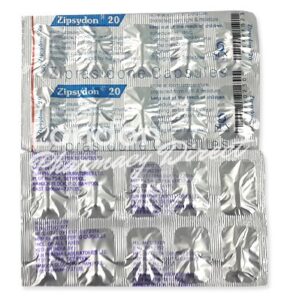
In stock
20mg · 40mg · 80mg
from 35,11 £
In brief
- Ziprasidone is an atypical antipsychotic of the kind used for schizophrenia and for mania in bipolar disorder, supplied here as an imported, unlicensed product.
- The listing carries 20 mg and 40 mg strengths in packs of 30 to 360, plus 80 mg in packs of 30 to 180.
- No ziprasidone medicine holds a UK licence, so it has no UK SmPC and no UK dosing schedule; a prescriber must take the decision.
Ziprasidone: an antipsychotic without a UK licence
Ziprasidone belongs to the atypical antipsychotics, the generation of medicines that came after haloperidol and chlorpromazine. It blocks dopamine D2 receptors and serotonin 5-HT2A receptors, and it acts on a few other serotonin receptors as well, a pattern that helps to damp down hallucinations, delusions and the racing thoughts of mania. It is not a sleeping medicine or a tranquilliser in the everyday sense, and it is not intended for the behavioural symptoms of dementia. The stock described on this page is imported.
What the listing offers
Ziprasidone comes in 20 mg, 40 mg and 80 mg versions here. The two smaller ones are available in 30, 60, 90, 120, 180 or 360 units, whereas the 80 mg strength stops at 180. The dose form of the imported product is not recorded in the listing, so this page speaks of units rather than tablets or capsules. How many a person takes, and how often, is a decision for the prescriber; a bigger pack simply means a longer supply between prescriptions.
Why there is no UK label to quote
The electronic medicines compendium, the UK’s reference source for licensed medicines, has no ziprasidone entry. There is accordingly no UK summary of product characteristics, no UK patient leaflet and no licensed UK indication or dose, and this page does not make one up. In the UK a doctor may prescribe an unlicensed medicine where a licensed alternative would not meet the patient’s needs, and the doctor then carries more of the responsibility for the choice. Licensed antipsychotics with established UK labelling include risperidone, olanzapine, quetiapine and aripiprazole, and it is reasonable to ask a prescriber why one of those would not do.
QT prolongation and why an ECG matters
Ziprasidone is chiefly associated with an effect on the QT interval, the stretch of the ECG tracing that reflects how the heart muscle recharges between beats. When the interval is stretched too far, a dangerous rhythm can result. For that reason the medicine is generally kept away from people with a known long QT interval, a recent heart attack, decompensated heart failure or certain rhythm disorders, and from anyone taking other QT-lengthening medicines, such as some antiarrhythmics. Doctors usually want an ECG and blood potassium and magnesium results beforehand. A history of fainting, palpitations or sudden cardiac death in the family should be raised at the outset.
Other cautions common to the class
As with other antipsychotics, there are warnings about neuroleptic malignant syndrome (fever, rigid muscles, confusion), tardive dyskinesia, seizures, a drop in blood pressure on standing, raised blood sugar and venous blood clots. Carbamazepine may lower ziprasidone levels, and the medicine can work against levodopa and dopamine agonists, which matters for anyone with Parkinson’s disease. Alcohol and sedatives add to drowsiness.
Effects to expect and effects to report
Drowsiness, restlessness, dizziness, headache, tremor, stiffness, blurred vision, nausea, constipation, indigestion, a dry mouth or extra saliva and weakness are the commonly reported complaints. Weight gain tends to be less marked than with some related medicines. Fainting, a racing or irregular heartbeat, a high temperature with rigid muscles, or movements that cannot be controlled need urgent medical help. Whoever takes Ziprasidone should give the prescriber a full list of other medicines, and suspected reactions to an imported product can be passed to the MHRA through the Yellow Card scheme.
Questions worth putting to the prescriber
Because no UK label exists, it helps to ask why this medicine has been chosen over a licensed one, how heart tests will be arranged and repeated, and what to do about a missed dose. Mention any previous heart rhythm problem, any family history of sudden death, low potassium, vomiting or diarrhoea, pregnancy or plans for it, and every prescribed or over-the-counter product in use. Do not stop an antipsychotic suddenly without advice, as symptoms can return.