Risperdal
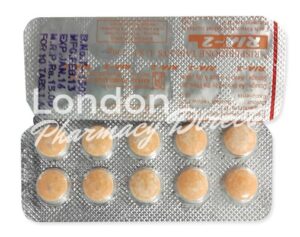
In stock
1mg · 2mg · 3mg · 4mg
from 4,57 £
In brief
- Risperdal is an imported risperidone product, an atypical antipsychotic prescribed for schizophrenia, manic episodes and some forms of persistent aggression.
- Four strengths are listed (1 mg, 2 mg, 3 mg and 4 mg), with 10 to 360 tablets per pack.
- Risperidone is a POM in the UK and licensed there as generic tablets, so this Risperdal is imported stock.
Risperdal: risperidone, dopamine and serotonin
Risperdal is the name on an imported tablet whose active substance is risperidone. Risperidone belongs to the atypical antipsychotics: it turns down signalling at dopamine and serotonin receptors, and that is how hallucinations, delusions and disordered thinking are brought under control. Older antipsychotics often leave people stiff and tremulous. Risperidone does so less often, though not never. One or two daily doses are swallowed, and a meal neither helps nor hinders absorption.
Four conditions named in the SmPC
The UK SmPC gives risperidone four jobs. Two are mainstream, namely schizophrenia and the manic phase of bipolar disorder when it is moderate or severe. The other two are narrower and time-limited, each for a maximum of six weeks. One concerns persistent aggression in people whose Alzheimer’s dementia is moderate to severe, after non-drug approaches have failed and where harm is a real risk. The other is persistent aggression in conduct disorder, for children from five and teenagers who have below-average intellectual functioning, where the behaviour is serious enough to warrant a medicine as one strand of a broader programme of care.
Which strength, and how the doses climb
Risperdal is listed in 1 mg, 2 mg, 3 mg and 4 mg tablets; any strength can be had in 10, 30, 60, 90, 120, 180 or 360. Having four sizes makes the small, gradual steps of titration easy to follow. An adult with schizophrenia starts on 2 mg a day, rises to 4 mg on day two, then usually stays between 4 and 6 mg. Beyond 10 mg the extra benefit is doubtful and movement problems become likelier, and nobody has studied more than 16 mg. During mania the opening dose is 2 mg daily, nudged up or down by 1 mg at intervals of at least a day, within 1 to 6 mg. Older people start with 0.5 mg twice daily, and 0.25 mg twice daily is the beginning for aggression in dementia. Where kidney or liver function is poor, every dose, first or later, is cut by half. Withdrawal should be tapered; stopping abruptly can bring nausea, vomiting, sweating and sleeplessness.
Cautions, and why dementia gets its own warning
For older patients with dementia the death rate on antipsychotics is raised, and cerebrovascular events such as stroke are more common; the SmPC picks out furosemide users as a group at extra risk. Across all age groups, other warnings apply: neuroleptic malignant syndrome, tardive dyskinesia (involuntary movements that may persist), raised blood glucose, high prolactin, a fall in white cells, dizzy spells on standing and QT prolongation on the ECG. Anyone listed for cataract surgery should alert the surgeon, since risperidone is linked with floppy iris syndrome. Sleepiness can be marked in the first days, so wait before driving or using machines. Regular check-ups matter, as weight, blood sugar and prolactin may need following.
Other medicines that change risperidone
Paroxetine and fluoxetine push risperidone levels up. Carbamazepine and rifampicin bring them down. Alcohol and other sedating products make the drowsiness worse, while risperidone itself opposes levodopa and dopamine agonists. Any other medicine that lengthens the QT interval needs care.
What people notice, and the UK licence picture
Parkinsonism, drowsiness, headache and trouble sleeping are very common. Akathisia, a restless urge to keep moving, is common, as are weight gain, a bigger appetite, anxiety, a stuffy nose, hazy vision, constipation, indigestion, nausea and tiredness. In Britain risperidone is supplied against prescription, as generic tablets, orodispersible tablets and an oral solution. The name Risperdal appears in the electronic medicines compendium only for the Consta long-acting injection, so the tablets here count as imported stock. Choosing to begin, alter or stop Risperdal is the prescriber’s call.