Levothyroxine
In stock
25mcg · 100mcg · 50mcg · 200mcg · 75mcg · 125mcg
from 45,03 £
In brief
- Levothyroxine supplies the thyroid hormone that a sluggish thyroid gland has stopped producing in sufficient amounts; it is a synthetic form of thyroxine.
- Six strengths from 25 to 200 mcg are listed, with 100, 200, 300 or 400 tablets (75 and 125 mcg: 100 or 200).
- Prescription-only in the UK, where several companies hold licences.
Replacing thyroxine: what levothyroxine does
Levothyroxine is a laboratory-made copy of thyroxine, the principal hormone secreted by the thyroid gland. A gland that falls short leaves people feeling worn out and chilly, with dry skin, weight gain and a flat mood, and a daily tablet puts the missing hormone back. The UK licence spans four situations: an underactive thyroid in an adult, one that a baby is born with, one that arises during childhood, and juvenile myxoedema. For most people it is a lifelong treatment, with blood tests for thyroid-stimulating hormone (TSH) steering the dose. Levothyroxine is not a slimming aid and should never be used as one.
Strengths on offer and tablet numbers
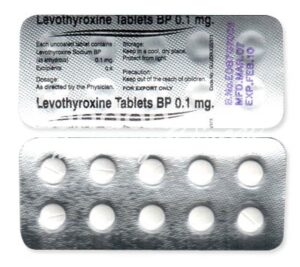
The listing runs from 25 mcg up to 200 mcg, with 50, 75, 100 and 125 mcg in between. Packs of 100, 200, 300 and 400 are available for 25, 50, 100 and 200 mcg, while 75 and 125 mcg are sold as 100 or 200 only. A ladder of strengths gives the prescriber fine control over the dose. The tablets are an imported generic, so the carton may be written for another country; read the strength on every strip and leave the tablets in the blister until you take them.
From the first dose to the maintenance dose
An adult under 50 usually starts at 100 mcg once a day. Every three to four weeks the amount goes up by 50 mcg until the typical maintenance dose, 100 to 200 mcg, is reached. After 50, the start is 50 mcg or lower. With heart disease, treatment begins more cautiously still: 25 mcg daily, or 50 mcg every second day, rising by 25 mcg roughly every month. A dose that rises too fast can produce symptoms of too much hormone, and the prescriber may then lower it or skip it for a day or two. Take the full day’s amount in a single go with water, on an empty stomach, before breakfast or the first meal of the day.
Who needs extra thought before starting
Anyone with untreated thyrotoxicosis or adrenal insufficiency should not take levothyroxine, nor anyone allergic to an ingredient. It is also held back during an acute heart attack, myocarditis or pancarditis. People with diabetes may find their glucose control shifts, so their treatment can need changing. During pregnancy or when trying for a baby, the dose often has to be altered, which is why your doctor should know.
Medicines that interfere with it
Iron, calcium, antacids, sucralfate and colestyramine all bind levothyroxine in the gut, so allow four to five hours between those and your tablet. Acid-suppressing proton pump inhibitors can reduce how much is absorbed. In the other direction, rifampicin, barbiturates, carbamazepine, phenytoin and St John’s wort speed up its removal, whereas oestrogen therapy may call for a bigger dose. As thyroid levels return to normal, warfarin can start to act more strongly. Amiodarone, sertraline, imatinib and orlistat are also on the list of potential interactions. Check with a pharmacist before taking something new, including supplements.
Effects of too much, and a word on brands
When the dose is too high the body speeds up. Expect a racing or uneven pulse, chest pain, nervousness, sweating, shaking, loose stools and difficulty sleeping. Some patients notice a difference after being switched between levothyroxine brands; mention that to the prescriber instead of changing the dose on your own. There are several licensed UK tablets from different companies, plus an oral solution.
Making it part of the morning routine
Pick a time, take the tablet with water before eating, and keep to it. Do not change product without talking to your prescriber. Should you forget a dose, ask a pharmacist what to do rather than taking two the next day. Blood tests continue until your dose is steady and then recur at intervals; report palpitations or persistent tiredness between them. Keep the blisters somewhere dry at ordinary room temperature. Your doctor or prescriber sets the dose and interprets your results.