Celebrex
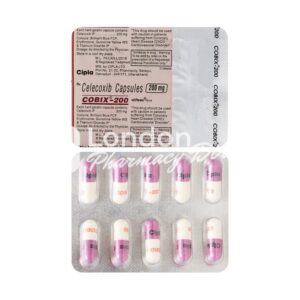
In brief
- Celebrex (celecoxib) is legally prescription-only in most countries and should be obtained with a prescription from a healthcare professional; while some pharmacies may supply it without a receipt in practice, this is not recommended and you should consult a prescriber before use.
- Celebrex is used for osteoarthritis, rheumatoid arthritis, ankylosing spondylitis, juvenile idiopathic arthritis, acute pain (including menstrual pain) and for polyp suppression in familial adenomatous polyposis; it is a selective COX‑2 inhibitor that reduces prostaglandin synthesis to relieve pain and inflammation.
- Usual dosages vary by indication: osteoarthritis 200 mg once daily or 100 mg twice daily; rheumatoid arthritis 100–200 mg twice daily; ankylosing spondylitis 200 mg once daily or 100 mg twice daily; acute pain initial 400 mg then 200 mg if needed on day 1, then 200 mg twice daily; juvenile dosing is weight-based (often ~50–100 mg twice daily); FAP 400 mg twice daily.
- Administered orally as capsules (commonly 100 mg and 200 mg) and, in some markets (US), as an oral solution (Elyxyb 25 mg/mL).
- Analgesic effects usually begin within 30–60 minutes, with meaningful pain relief often experienced within 1–2 hours.
- Duration of action is typically around 12 hours (plasma half-life ~10–12 hours), which is why dosing is once or twice daily depending on the regimen.
- Avoid or limit alcohol while taking celecoxib — alcohol increases the risk of gastrointestinal bleeding and other adverse effects.
- The most common side effect is dyspepsia (indigestion) and abdominal pain; headache, dizziness and skin rash/pruritus are also commonly reported.
- Would you like to try “celebrex” without a prescription?
Basic Celebrex Information
- INN (International Nonproprietary Name): Celecoxib
- Brand Names Available In United Kingdom: Celebrex® (capsules commonly 100 mg and 200 mg); generic celecoxib preparations are widely available from multiple manufacturers.
- ATC Code: M01AH01
- Forms & Dosages: Capsules 100 mg and 200 mg in blister packs (10, 30, 60); an oral solution formulation exists in some markets (Elyxyb® 25 mg/mL, US only).
- Manufacturers In United Kingdom: Pfizer (original Celebrex®) and many generic manufacturers (eg Teva, Mylan, Sandoz); availability varies by pharmacy and local supply.
- Registration Status In United Kingdom: Licensed for prescription use in Europe/UK; refer to national regulatory listings for the most current product references.
- OTC / Rx Classification: Prescription Only (Rx)
- Standard Dosage Recommendations By Indication: Osteoarthritis — 200 mg once daily or 100 mg twice daily; Rheumatoid Arthritis — 100–200 mg twice daily; Ankylosing Spondylitis — 200 mg once daily or 100 mg twice daily; Acute Pain/Menstrual Cramps — initial 400 mg then 200 mg if needed on day 1, then 200 mg twice daily as required; Juvenile Idiopathic Arthritis (children ≥2 years) — weight‑based dosing; Familial Adenomatous Polyposis (FAP) — specialist dosing (eg 400 mg twice daily).
- Dosage Adjustments: Reduce initial dose by 50% in moderate hepatic impairment (Child‑Pugh B); avoid in severe liver impairment; use caution in renal impairment; start elderly patients at the lowest effective dose and monitor renal and cardiovascular status.
- Treatment Duration & Regimens: Use lowest effective dose for the shortest time practicable for acute pain; chronic arthritis may require long‑term therapy with regular review.
- Instructions For Missed Doses: Take as soon as remembered unless near the next scheduled dose; do not double up.
- Overdose Management: Symptoms may include drowsiness, nausea, vomiting, stomach pain and gastrointestinal bleeding; management is supportive — contact emergency services or poison control for severe cases.
- Storage & Transport: Store below 25°C; keep dry in the original packaging and do not use past the expiry date.
- Absolute Contraindications: Known allergy to celecoxib, sulfonamides, NSAIDs or any inactive ingredients; history of aspirin/NSAID‑induced asthma, urticaria or other allergic reactions; active gastrointestinal bleeding or peptic ulcer disease; pregnancy (especially third trimester).
- Common Side Effects: Dyspepsia, abdominal pain, diarrhoea, nausea, headache, dizziness, rash and possible hypertension or fluid retention.
Everyday Use & Best Practices
Worried about when to take celebrex so it fits daily life and helps pain control?
Celecoxib is commonly prescribed once or twice daily depending on the condition and dose.
For osteoarthritis the typical options are 200 mg once daily or 100 mg twice daily, and for rheumatoid arthritis dosing is usually 100–200 mg twice daily.
Choose a consistent time each day — take it in the morning if your pain is worse on getting up, or in the evening if night pain disrupts sleep.
Start with the lowest effective regimen and arrange a review with your GP or pharmacist to check effectiveness and side effects.
You can take celecoxib with or without food, so fit dosing to your routine.
If you notice indigestion, try taking it with breakfast or a light snack rather than a heavy evening meal.
- Do: Pick a consistent dosing time and log when pain improves.
- Do: Start at the lowest effective dose and review with a clinician.
- Do: Try taking with a light meal if you develop dyspepsia.
- Don’t: Mix doses or take more than prescribed to catch up.
- Don’t: Drink alcohol around doses — it raises the risk of gastrointestinal side effects.
Morning Vs Evening Dosing
Celecoxib dosing frequency depends on the indication and total daily dose.
Osteoarthritis is often managed with 200 mg once daily or 100 mg twice daily; rheumatoid arthritis commonly uses 100–200 mg twice daily.
Set dosing times that match symptom patterns so you are less likely to miss doses.
Discuss any change with your GP or pharmacist before altering dosing.
Taking With Or Without Meals (UK Diet Habits)
Food does not greatly alter absorption so celecoxib may be taken with or without food.
In the UK many people have heavier evening meals; if you notice dyspepsia after an evening dose, move it to breakfast or take with a milder snack.
Limit alcohol around dosing because alcohol increases the chance of gastrointestinal irritation and bleeding.
- Take with food if you get indigestion.
- Avoid excessive alcohol while using celecoxib.
- Keep to prescribed dosing times and consult the pharmacist if you have persistent tummy upset.
Safety Priorities
Who should not take celecoxib and what safety checks are essential?
Absolute contraindications include known allergy to celecoxib or sulfonamides, a history of aspirin or NSAID‑induced asthma or urticaria, active gastrointestinal bleeding or peptic ulcer disease, and pregnancy — especially the third trimester.
People with cardiovascular disease or risk factors should discuss celecoxib with their prescriber because caution is advised and monitoring may be needed.
Celecoxib is a prescription‑only medicine and must be authorised by a clinician.
Celecoxib can cause dizziness and headache in some people.
If you experience dizziness, avoid driving or operating machinery until you know how it affects you.
For safety‑critical roles such as construction or transport work, speak to your GP or occupational health about alternatives or fitness to work.
- Checklist — Contraindications To Flag: Allergy to celecoxib/sulfonamides; aspirin/NSAID‑induced asthma; active peptic ulcer or GI bleeding; pregnancy.
| When Symptomatic | Activity To Avoid |
|---|---|
| Dizziness or Headache | Avoid driving or operating machinery |
| Severe Tummy Pain/Black Stool | Seek urgent medical assessment; avoid heavy physical work |
Dosage & Adjustments
Need a simple summary of standard dosing and how to adjust for age or comorbidity?
Follow NHS and product recommendations for indication‑specific dosing and start low where appropriate.
The standard regimens are: osteoarthritis — 200 mg once daily or 100 mg twice daily; rheumatoid arthritis — 100–200 mg twice daily; ankylosing spondylitis — 200 mg once daily or 100 mg twice daily; acute pain/menstrual cramps — initial 400 mg then 200 mg if needed on day 1, then 200 mg twice daily as required.
For chronic conditions the guiding principle is the lowest effective dose for the shortest time practicable with regular review.
| Indication | Typical Starting Dose | Common Adjustment |
|---|---|---|
| Osteoarthritis | 200 mg once daily or 100 mg twice daily | Use lowest effective dose; monitor GI symptoms |
| Rheumatoid Arthritis | 100–200 mg twice daily | Adjust to response; regular review essential |
| Acute Pain/Menstrual Cramps | 400 mg initial then 200 mg if needed (day 1), then 200 mg twice daily | Short‑term use only |
Special Cases (Elderly, Comorbidities)
Elderly patients should start at the lowest effective dose and be monitored for renal function and cardiovascular risk.
Reduce the initial dose by 50% in moderate hepatic impairment (Child‑Pugh B) and avoid celecoxib in severe hepatic impairment.
Use caution in renal impairment and generally avoid celecoxib in severe renal dysfunction.
User Testimonials
What do UK patients actually say about celecoxib?
Many patients report meaningful pain relief for osteoarthritis and post‑operative pain with celecoxib, noting fewer stomach problems than with traditional NSAIDs.
On NHS forums and patient groups people often say once‑daily dosing fits routines and helps sleep when night pain is a problem.
Both Pfizer’s branded Celebrex and generic celecoxib products are mentioned frequently in patient comments.
Common challenges raised by users include private cost concerns, worry about cardiovascular risk, and occasional mild dyspepsia or headaches.
- Pros Reported: Effective pain relief, convenient once‑daily options, fewer GI symptoms for some users.
- Cons Reported: Cost when paying privately, need for blood pressure and kidney monitoring, occasional mild side effects.
Anonymous patient quotes from UK forums:
- “Switched from ibuprofen to celecoxib — stomach was kinder and sleep improved.”
- “Good pain control but my GP monitors my blood pressure regularly.”
Buying Guide
How to obtain celecoxib in the UK and where to compare prices.
Celecoxib (Celebrex® and generics) is prescription‑only in the UK and is available from major pharmacy chains such as Boots, LloydsPharmacy and Superdrug, as well as independent community pharmacies.
Online NHS services and private clinics can issue prescriptions which UK‑registered pharmacies will dispense.
Pfizer supplies the original branded Celebrex while generics are produced by manufacturers such as Teva, Mylan and Sandoz.
| Prescription Route | Typical Cost Consideration |
|---|---|
| NHS Prescription (England charge applies unless exempt) | Lower cost for those eligible; check exemptions |
| Private Prescription | Branded Celebrex is usually costlier than generic options |
- Bring to the pharmacy: current repeat prescription, known allergies (eg sulfonamide), list of other medicines and any prescription exemption details.
- Ask the pharmacist about generic celecoxib alternatives to reduce cost.
In our online pharmacy, celebrex is supplied following an authorised prescription, with discreet delivery to the United Kingdom in 5–14 days.
What’s Inside & How It Works
Curious about the active ingredient and why celecoxib can be gentler on the stomach?
The active ingredient is celecoxib, a selective COX‑2 inhibitor (ATC: M01AH01) available in capsules of 100 mg and 200 mg.
Some markets have an oral solution formulation, but capsules are the common form in the UK.
Patients with sulfonamide allergy should not take celecoxib because the molecule contains a sulfonamide moiety.
| How It Works | What That Means For You |
|---|---|
| Blocks COX‑2 enzyme, reducing prostaglandin production | Reduces inflammation and pain with less COX‑1 inhibition |
| Saves COX‑1 activity that helps protect the stomach lining | Often fewer gastrointestinal side effects compared with non‑selective NSAIDs |
| Still affects renal prostaglandins and cardiovascular pathways | Cardiac and renal risks remain and require monitoring |
- Ingredient Alerts: Do not take if allergic to sulfonamides or any inactive ingredients listed on the pack.
- Formulation Note: Celebrex® is the branded product; generic celecoxib capsules contain the same active substance.
Main Indications
Which conditions is celecoxib approved to treat in the UK?
Approved indications include chronic musculoskeletal conditions such as osteoarthritis, rheumatoid arthritis, juvenile idiopathic arthritis (children aged ≥2 years with weight‑based dosing) and ankylosing spondylitis.
Celecoxib is also licensed for short‑term use in acute pain including menstrual cramps and for specialist use in Familial Adenomatous Polyposis (FAP) for polyp suppression under specialist care.
Use is prescription‑only and guided by MHRA/NHS practice.
- Approved Uses: Osteoarthritis; rheumatoid arthritis; juvenile idiopathic arthritis (children ≥2 years); ankylosing spondylitis; acute pain and menstrual pain; FAP under specialist supervision.
- Common Off‑Label Uses: Selected acute pain scenarios where GI risk is a concern or where standard NSAIDs are not tolerated, after clinician risk‑benefit assessment.
Discuss specialist referral with your GP if treatment is complex or monitoring needs are significant.
Interaction Warnings
Which foods and medicines should you watch out for while taking celecoxib?
Food has minimal impact on celecoxib absorption so it may be taken with or without a meal.
Alcohol should be limited because it increases the risk of gastrointestinal bleeding when combined with NSAIDs.
Caffeine in tea or coffee does not have a major interaction with celecoxib but may worsen headaches in some people.
Key drug interactions include increased bleeding risk with anticoagulants, potential reduced renal function when combined with diuretics or ACE inhibitors, and additive blood pressure effects with antihypertensives.
Avoid taking celecoxib with other NSAIDs or COX‑2 inhibitors.
- Ask Your Pharmacist About These: Warfarin or other anticoagulants; ACE inhibitors or ARBs; loop or thiazide diuretics; other NSAIDs or aspirin.
| Concomitant Drug | Potential Effect |
|---|---|
| Anticoagulants (eg warfarin) | Increased bleeding risk |
| ACE Inhibitors / Diuretics | Possible reduced renal function and decreased antihypertensive effect |
| Other NSAIDs | No added benefit and increased GI/cardiovascular risk |
Report any suspected adverse reactions via the MHRA Yellow Card scheme and discuss interactions during dispensing.
Latest Evidence & Insights
What do recent UK/EU analyses say about celecoxib safety and monitoring?
Recent analyses continue to balance reduced gastrointestinal complications against cardiovascular risk for COX‑2 selective agents such as celecoxib.
Systematic reviews up to 2024 indicate lower rates of GI complications with COX‑2 inhibitors compared with non‑selective NSAIDs, while cardiovascular risk remains elevated in patients with existing heart disease or risk factors.
Real‑world cohorts from 2022–2025 emphasise the importance of monitoring blood pressure and renal function in long‑term users.
- Use the lowest effective dose for the shortest suitable time.
- Discuss cardiovascular risk profile with your GP before long‑term therapy.
- Schedule annual reviews and monitoring for blood pressure and kidney function if taking celecoxib long term.
Decision Steps — Mini Flowchart:
- Start: Confirm indication and baseline BP/kidney tests.
- Monitor: Check BP and renal function after starting and at intervals.
- Review: Annual medication review and reassess need for continued therapy.
Alternative Choices
Wondering whether celecoxib is the right option compared with other NHS choices?
Common NHS alternatives include traditional NSAIDs such as ibuprofen, naproxen and diclofenac, and non‑NSAID options like paracetamol.
Etoricoxib is another COX‑2 selective agent available for some patients, though choice depends on individual risk and clinical judgement.
Pros of celecoxib include often fewer gastrointestinal side effects for many patients compared with non‑selective NSAIDs.
Cons include remaining cardiovascular and renal risks and the need for prescription and monitoring.
| Drug | Efficacy | GI Risk | CV Risk | Typical Dosing |
|---|---|---|---|---|
| Celecoxib | Good for inflammatory joint pain | Lower than non‑selective NSAIDs for many patients | Elevated in high‑risk patients | 100–200 mg once or twice daily |
| Ibuprofen | Effective for pain and inflammation | Higher GI risk than COX‑2 selective agents | Lower at low doses, but still present | 200–400 mg every 4–6 hours as needed |
| Paracetamol | Modest pain relief, fewer GI/CV risks | Low GI risk | Low CV risk | 500–1000 mg up to 4 times daily |
When discussing a switch with your GP or pharmacist, bring a list of current medicines, history of ulcers or heart disease and recent blood pressure readings.
Regulation Snapshot
Who oversees celecoxib safety and what systems protect patients?
Celecoxib is prescription‑only in the UK and is regulated by national authorities consistent with European frameworks.
NHS prescribing follows clinical guidance to use the lowest effective dose and to consider comorbidities and monitoring needs for long‑term users.
Products are supplied by Pfizer (Celebrex®) and numerous generics which may appear on local formularies according to commissioning arrangements.
| Regulator / Provider | Responsibility |
|---|---|
| MHRA | Licensing and safety surveillance |
| NHS | Prescribing guidance and local formularies |
| Community Pharmacists | Counselling, interaction checks and flagging concerns at dispensing |
- Report adverse reactions via the MHRA Yellow Card scheme.
- Ensure repeat prescriptions are reviewed by the GP at appropriate intervals.
FAQ Section
Can I take celecoxib every day?
Yes when prescribed for chronic conditions such as osteoarthritis, but only at the lowest effective dose and with regular clinical reviews for blood pressure, kidney function and cardiovascular risk.
Is celecoxib safer for my stomach than ibuprofen?
Celecoxib is selective for COX‑2 and generally causes fewer gastrointestinal side effects than non‑selective NSAIDs such as ibuprofen, but gastrointestinal risk is not eliminated and it is contraindicated in active peptic ulcer disease or GI bleeding.
What if I miss a dose?
Take your next dose as soon as you remember unless it is near the time for your next scheduled dose; do not double up to make up a missed dose.
Can I take celecoxib with my blood pressure tablets?
Discuss this with your GP or pharmacist; celecoxib can reduce the effectiveness of some antihypertensives and may affect renal function so monitoring is recommended.
Guidelines For Proper Use
What should pharmacists and patients cover at counselling?
Pharmacists should confirm the indication, ask about allergies (particularly sulfonamide allergy), review current medicines (especially anticoagulants, ACE inhibitors and diuretics) and advise on common side effects such as dyspepsia, headache and hypertension.
Provide written information on dose, storage (store below 25°C, keep dry, in original packaging), missed doses and when to seek urgent help for signs of GI bleed or chest pain.
Advise scheduling medication review appointments and routine checks for blood pressure and kidney function for long‑term users.
- Handout Checklist For Patients: Indication; dose; known allergies; current medicines; when to stop and seek help; monitoring schedule.
- Storage Reminder: Keep in original box, store below 25°C and avoid moisture.
For cost or prescription queries, remind patients about prescription charge rules in England and free prescriptions in Scotland, Wales and Northern Ireland where applicable.
Delivery Across United Kingdom
| City | Region | Delivery Time |
|---|---|---|
| London | Greater London | 5-7 days |
| Manchester | Greater Manchester | 5-7 days |
| Birmingham | West Midlands | 5-7 days |
| Glasgow | Scotland | 5-7 days |
| Edinburgh | Scotland | 5-7 days |
| Cardiff | Wales | 5-7 days |
| Belfast | Northern Ireland | 5-7 days |
| Leeds | West Yorkshire | 5-7 days |
| Liverpool | Merseyside | 5-7 days |
| Bristol | South West England | 5-7 days |
| Newcastle | Tyne and Wear | 5-9 days |
| Sheffield | South Yorkshire | 5-9 days |
| Nottingham | Nottinghamshire | 5-9 days |
| Southampton | Hampshire | 5-9 days |
| Portsmouth | Hampshire | 5-9 days |