Carbamazepine
In brief
- Carbamazepine can be obtained from pharmacies and licensed e‑pharmacies; it is prescription‑only (Rx) in the UK, EU, USA, Canada and most other jurisdictions, although availability and legal requirements vary and some vendors may offer it without a prescription—check local laws and pharmacy policy.
- Carbamazepine is used for epilepsy (partial and generalised tonic‑clonic seizures), trigeminal neuralgia and as a mood stabiliser in bipolar disorder; it is a carboxamide antiepileptic that primarily blocks voltage‑gated sodium channels, stabilising the inactive state of sodium channels and reducing repetitive neuronal firing.
- Typical dosing in adults starts at 100–200 mg twice daily with gradual titration; maintenance commonly ranges 800–1,200 mg/day (some regimens up to 1,600 mg/day in bipolar disorder or refractory cases); children are dosed by weight (commonly 10–20 mg/kg/day initially); elderly and those with hepatic impairment start lower and titrate slowly.
- Administered orally as tablets (immediate or controlled/prolonged‑release), chewable tablets, oral suspension; intravenous formulation is available in some markets (Carnexiv) but is uncommon.
- Onset of effect varies by indication: anticonvulsant and analgesic effects may begin within hours to a few days, but clinical benefit often requires gradual titration and assessment over several days to weeks.
- Duration of action depends on formulation: immediate‑release dosing often requires twice‑daily administration with an effective duration of approximately 8–12 hours, while prolonged/controlled‑release preparations provide 12–24 hours of coverage; auto‑induction shortens the half‑life over the first few weeks of therapy.
- Avoid or limit alcohol while taking carbamazepine because combined use increases central nervous system depression (drowsiness, dizziness) and may worsen side effects or impair coordination.
- The most common side effects are dizziness and drowsiness; other frequent adverse effects include nausea, vomiting, mild skin rash, blurred vision, ataxia and hyponatraemia (SIADH).
- Would you like to try carbamazepine without a prescription?
Basic Carbamazepine Information
- INN (International Nonproprietary Name): Carbamazepine
- Brand Names Available In United Kingdom: Tegretol (commonly), generics and prolonged‑release options such as Tegretol CR and Carbamazepin Tillomed
- ATC Code: N03AF01
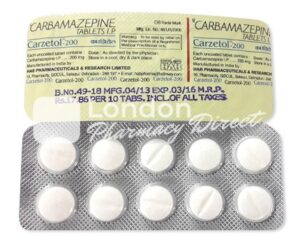
- Forms & Dosages: Tablets 100mg, 200mg, 400mg; Prolonged/Controlled Release tablets 200mg, 400mg; oral suspension 100mg/5ml (where available)
- Manufacturers In United Kingdom: Novartis, Pfizer, Polpharma, and other international suppliers (not specified by UK‑only manufacturer list)
- Registration Status In United Kingdom: Prescription‑only medicine licensed and regulated by MHRA
- OTC / Rx Classification: Prescription‑only (Rx)
Worried about starting carbamazepine and keeping daily life normal?
Carbamazepine (often sold as Tegretol) is prescription‑only and must be started and titrated under clinician supervision in line with MHRA and NHS guidance.
Keep an up‑to‑date medicines list for every health appointment and show it to your pharmacist at Boots, LloydsPharmacy or Superdrug.
Carry an allergy card if you have had drug reactions and report new rashes, unexplained bruising, confusion or severe drowsiness to your GP or A&E immediately.
Use NHS e‑prescriptions and regulated online pharmacies only and store tablets at 15–30°C away from moisture.
What To Carry: medicines list, allergy card, latest blood test results.
When To Call 111/A&E: new widespread rash, fainting, sudden severe drowsiness, difficulty breathing or signs of infection.
Everyday Use & Best Practices
Morning Vs Evening Dosing
How do I fit doses around work and sleep?
Aim to take carbamazepine at the same times each day to keep blood levels steady.
Immediate‑release regimens are commonly given twice daily—morning and evening—while some prolonged/modified‑release (MR/CR) tablets may be suitable for once or twice daily dosing depending on your prescriber.
If a specialist or GP has set a titration schedule, follow it precisely and keep pharmacy labels for reference.
Taking With Or Without Meals (UK Diet Habits)
Will food affect my tablets?
Carbamazepine can be taken with or without food but taking it with food often reduces stomach upset.
Use typical UK meals as anchors—take one dose with breakfast and the other with your evening meal if on twice‑daily dosing.
Avoid heavy alcohol intake; alcohol increases drowsiness and can worsen side effects or seizure control.
- Daily Routine Checklist: set phone alarms or use NHS app reminders; keep tablets in original packaging; attend scheduled blood tests.
- Missed‑Dose Checklist: take missed dose as soon as remembered unless it is almost time for the next dose; do not double up.
- Practical Tip: if you use NHS repeat prescriptions, arrange pharmacy collection or EPS delivery to avoid missed doses.
Safety Priorities
Who Should Avoid It (MHRA Warnings)
Am I at risk from carbamazepine?
Do not take carbamazepine if you have had previous hypersensitivity to carbamazepine or tricyclic compounds, a history of bone marrow depression, or atrioventricular block.
Avoid it if you have taken monoamine oxidase inhibitors within the preceding 14 days.
Pregnancy requires careful discussion of risks and benefits with your prescriber; folic acid supplementation and specialist review are commonly advised.
Activities To Limit (Driving, Work Safety)
How will it affect driving and work?
Carbamazepine commonly causes dizziness, drowsiness and blurred vision so do not drive or operate heavy machinery until you know how it affects you.
If seizures persist or side effects impair your ability to drive, you must notify the DVLA and discuss restrictions with your clinician.
For safety‑critical jobs, inform your employer and GP; occupational health may recommend temporary adjustments.
- Monitoring: regular blood tests are recommended—full blood count, liver function tests and sodium for SIADH/hyponatraemia.
- Red Flag: report any rash promptly as mild rashes can precede severe hypersensitivity.
Dosage & Adjustments
General Regimen (NHS Guidance)
What is a typical starting dose?
Adults commonly start carbamazepine at 100–200mg twice daily with gradual titration under clinician supervision.
Maintenance doses for epilepsy commonly fall in the range 800–1,200mg per day given in divided doses, but the exact regimen is individualised.
For trigeminal neuralgia, treatment often starts at 100mg twice daily and is titrated to effect.
Special Cases (Elderly, Comorbidities)
How are doses altered for children and elderly patients?
Children are dosed by weight, typically starting around 5–10mg/kg/day and titrating to effect; specialist paediatric advice is required.
Elderly patients should start low and titrate slowly because of increased CNS sensitivity and higher hyponatraemia risk.
In liver impairment, avoid where possible or use the minimum effective dose and monitor hepatic function and plasma concentrations closely.
| Indication | Typical Starting Range | Typical Maintenance |
|---|---|---|
| Epilepsy (Adult) | 100–200mg twice daily | 800–1,200mg/day divided |
| Trigeminal Neuralgia | 100mg twice daily | Up to 1,200mg/day (individualised) |
| Bipolar (off‑label) | 200mg twice daily | Up to 1,600mg/day (max suggested) |
User Testimonials
Positive Reports From UK Patients
Does it actually help people?
Many UK patients report substantial seizure reduction, especially for partial and tonic‑clonic seizures, after careful titration of carbamazepine.
People with trigeminal neuralgia frequently describe clear pain relief and are often positive about availability of Tegretol and generic carbamazepine at high‑street pharmacies.
Some bipolar patients note mood stabilisation where other treatments were unsuitable.
Common Challenges (Patient.info, NHS Forums)
What problems do people share online?
Forum themes include initial drowsiness and dizziness that can affect daily life, anxiety about skin rashes, and the logistics of regular blood monitoring.
Interaction concerns—especially with contraceptives and antidepressants—are common topics in Patient.info and NHS community threads.
- What Patients Commonly Report: effective seizure control, initial sedation, need for monitoring, interaction worries.
- Practical Peer Tips: carry a medication card, set reminders for blood tests, keep a symptom diary for the first 8–12 weeks.
Buying Guide
Pharmacy Sources (Boots, LloydsPharmacy, Superdrug)
Where can I collect my prescription?
Carbamazepine is prescription‑only and in the UK is obtained via a GP or specialist and collected at high‑street pharmacies such as Boots, LloydsPharmacy or Superdrug.
The Electronic Prescription Service (EPS) and NHS e‑prescriptions simplify collection and repeat dispensing.
Both branded Tegretol and generic carbamazepine are commonly stocked; prolonged‑release 200mg and 400mg tablets are available.
Price Comparison (NHS Prescription Charge Vs Private)
How much will it cost?
In England the NHS prescription charge applies where not exempt; Scotland, Wales and Northern Ireland have free prescriptions which can greatly reduce out‑of‑pocket cost for repeat therapy.
Private prescriptions include dispensing fees and drug cost—compare pharmacy price checks online before ordering privately.
For repeat supplies, register for NHS repeat dispensing or EPS to reduce trips and administrative hassle.
| Region | NHS Prescription Cost |
|---|---|
| England | Standard prescription charge unless exempt |
| Scotland | Prescriptions free |
| Wales | Prescriptions free |
| Northern Ireland | Prescriptions free |
In our online pharmacy, carbamazepine is available without a prescription, with discreet delivery to United Kingdom in 5-14 days.
What’s Inside & How It Works
Ingredients Overview
What is in the tablet?
The active ingredient is carbamazepine (INN) and formulations include tablets (100mg, 200mg, 400mg), prolonged/controlled‑release tablets (200mg, 400mg) and oral suspension 100mg/5ml where available.
Excipients differ between manufacturers—check the patient information leaflet if you have allergies to lactose, dyes or other excipients.
Mechanism Basics Explained Simply
How does it stop seizures or pain?
Carbamazepine is an anticonvulsant in the carboxamide derivative class (ATC N03AF01) that stabilises voltage‑gated sodium channels.
This reduces abnormal electrical activity in the brain, preventing seizure spread and damping hyperexcitable nerve signals—explaining its role in epilepsy and nerve pain such as trigeminal neuralgia.
- Formulations: immediate‑release tablets, MR/CR tablets, oral suspension.
- Practical Note: MR/CR and immediate‑release versions are not interchangeable without clinician advice; switching may need monitoring and dose adjustment.
Main Indications
Approved Uses (MHRA Listing)
What is carbamazepine licensed for?
Carbamazepine is considered first‑line for partial seizures and some generalised tonic‑clonic seizures and is licensed for trigeminal neuralgia.
MHRA and EMA licensing and safety summaries list these indications and inform required monitoring.
Off‑Label Uses In UK Clinics
Does it have other uses?
Carbamazepine is commonly used off‑label as a mood stabiliser in bipolar disorder when lithium is unsuitable and for some neuropathic pain syndromes; such uses follow local psychiatric or pain‑clinic protocols.
| Indication | Typical Starting Dose | Monitoring |
|---|---|---|
| Partial/Generalised Seizures | 100–200mg twice daily | Plasma levels, FBC, LFTs, sodium |
| Trigeminal Neuralgia | 100mg twice daily | Clinical response, side effects, blood tests |
| Bipolar Disorder (off‑label) | 200mg twice daily | Clinical review and blood monitoring |
Interaction Warnings
Food Interactions (Alcohol, Tea/Coffee)
Will my tea or alcohol affect carbamazepine?
Avoid heavy alcohol consumption because alcohol increases sedation and may worsen seizure control.
Normal tea or coffee intake is not a major interaction, but caffeine can affect sleep and, in some individuals, seizure threshold—monitor your response.
Drug Conflicts (MHRA Yellow Card Reports)
Which medicines clash with carbamazepine?
Carbamazepine is a strong inducer of CYP3A4 and can reduce plasma levels of many medicines including hormonal contraceptives, some anticoagulants, antidepressants and other anticonvulsants.
It may also increase drowsiness when combined with other CNS depressants.
Pharmacists will routinely check interactions when dispensing and you should report suspected interactions or adverse reactions via the MHRA Yellow Card scheme.
- Common Interaction Alerts: hormonal contraceptives (reduced efficacy), warfarin (dose adjustments), some statins and some antidepressants.
- Practical Advice: always bring a full list of prescribed and OTC medicines and supplements to the pharmacy.
Latest Evidence & Insights
Key UK & EU Studies 2022–2025
What has changed recently?
Post‑2020 literature (2022–2025) has reinforced the need for routine monitoring for haematological effects and hyponatraemia and highlighted real‑world drug‑drug interaction risks.
UK audits and clinic studies emphasise that oxcarbazepine may have fewer CYP‑mediated interactions and a lower haematological risk for some patients, though carbamazepine retains established efficacy for many seizure types.
Pregnancy counselling remains important because of teratogenic risk; clinicians now routinely balance efficacy versus interaction profile and patient preference when selecting therapy.
- What’s Changed 2022–2025: stronger emphasis on blood and sodium monitoring, more individualised prescribing, consideration of oxcarbazepine as an alternative for interaction‑sensitive patients.
Alternative Choices
NHS Prescribing Alternatives With Pros/Cons Checklist
What can be used instead?
Common NHS alternatives include oxcarbazepine, lamotrigine, levetiracetam and valproate—each has advantages and trade‑offs depending on seizure type, comorbidity and pregnancy plans.
- Oxcarbazepine: fewer CYP interactions; hyponatraemia risk remains.
- Lamotrigine: useful for mood stabilisation and seizure control; requires slow titration because of rash risk.
- Levetiracetam: broad‑spectrum with minimal interactions; behavioural side effects in some.
- Valproate: highly effective for many seizure types but carries major teratogenic risk—stringent pregnancy prevention measures apply in UK practice.
Choice depends on seizure type, interactions, pregnancy considerations and patient preference—discuss options with your neurologist or GP.
Regulation Snapshot
MHRA Approval & NHS Prescribing Framework
Who decides how carbamazepine is used?
Carbamazepine is prescription‑only and subject to MHRA regulation in the UK, with EMA/EC referrals (such as the June 2020 decision) informing safety frameworks.
Specialists commonly initiate treatment, with shared‑care arrangements for monitoring and GP repeat prescribing under NHS frameworks.
Practical Steps For UK Patients (Prescriptions, Repeat Dispensing)
How do I manage ongoing supplies?
Register for repeat dispensing or use the Electronic Prescription Service (EPS) once stable to simplify collection.
Attend scheduled blood tests (full blood count, liver function, sodium) and keep records of all medications for every appointment.
If planning pregnancy, arrange specialist review before conception to discuss folic acid and alternative options.
FAQ Section
Common UK Patient Questions
- Can I drink alcohol while on carbamazepine?
Small amounts may be tolerated but alcohol worsens drowsiness and can reduce seizure control—best avoid heavy drinking.
- Will carbamazepine affect my contraception?
Yes. Carbamazepine induces liver enzymes and can make hormonal contraceptives less effective—discuss non‑hormonal or higher‑reliability options with your GP.
- How often do I need blood tests?
Baseline tests (FBC, LFTs, sodium) are done before or soon after start, then periodic monitoring depends on clinical judgement but commonly occurs within weeks of initiation and at intervals thereafter.
- Is Tegretol the same as carbamazepine?
Yes. Tegretol is a common brand name for carbamazepine in the UK; generics and prolonged‑release versions are widely available.
Guidelines For Proper Use
UK Pharmacist Counselling Style
What will the pharmacist tell me?
When dispensing, pharmacists should confirm the indication, explain dosing times and whether you have MR/CR or immediate‑release tablets, and warn about drowsiness and interactions including with contraceptives.
Pharmacists typically advise on storage (15–30°C), reinforce blood‑test schedules and supply the patient information leaflet.
NHS Patient Support Advice
How does the NHS help me stay safe?
Use the NHS app for repeat prescriptions and appointment reminders, report adverse effects via the MHRA Yellow Card, and arrange prompt specialist contact if pregnant or planning pregnancy.
Bring a full medicines list to consultations, note side effects and agree monitoring dates with your prescriber.
- Pharmacist Counselling Points: confirm allergy history, dosing schedule, interactions, storage, monitoring dates.
- Patient Follow‑Up Actions: keep medication card, attend blood tests, notify dentist and other clinicians you take carbamazepine.
Delivery Across United Kingdom
| City | Region | Delivery Time |
|---|---|---|
| London | Greater London | 5-7 days |
| Birmingham | West Midlands | 5-7 days |
| Manchester | Greater Manchester | 5-7 days |
| Glasgow | Scotland | 5-7 days |
| Leeds | West Yorkshire | 5-7 days |
| Liverpool | Merseyside | 5-7 days |
| Edinburgh | Scotland | 5-7 days |
| Bristol | South West England | 5-7 days |
| Sheffield | South Yorkshire | 5-9 days |
| Newcastle upon Tyne | North East England | 5-9 days |
| Nottingham | Nottinghamshire | 5-9 days |
| Leicester | Leicestershire | 5-9 days |
| Cardiff | Wales | 5-9 days |