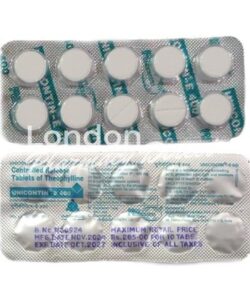
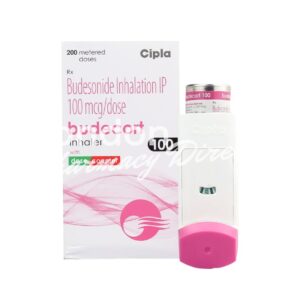
Budecort
In brief
- In our pharmacy, you can buy Budecort without a prescription, with delivery in 9–21 days throughout the United Kingdom. Discreet and anonymous packaging.
- Budecort (budesonide) is used as an anti-inflammatory corticosteroid for maintenance treatment of asthma, as part of COPD therapy (usually combined with long‑acting bronchodilators), for allergic rhinitis (nasal formulations) and for local treatment of inflammatory bowel disease with enteric formulations; it works as a glucocorticoid receptor agonist, reducing airway and mucosal inflammation by inhibiting cytokine production and inflammatory cell recruitment.
- Usual doses vary by indication: inhaled asthma maintenance commonly 200–800 μg/day in divided doses (children 100–400 μg/day); COPD regimens 200–1600 μg/day as part of combination therapy; Crohn’s/IBD enteric capsules 9 mg once daily for about 8 weeks; nasal spray typically 64 μg per nostril once or twice daily; rectal foam 2 mg once or twice daily.
- Forms of administration include pressurised inhaler (metered‑dose), dry powder inhaler, nebuliser nebules/respules, oral enteric‑coated capsules, rectal foam/enema and nasal spray — administered by inhalation, oral capsule, rectal instillation or intranasal spray depending on the product.
- Onset of effect depends on formulation: symptomatic improvement with nasal budesonide may begin within 12–24 hours, inhaled anti‑inflammatory benefits often become noticeable over days with peak effect in 1–2 weeks, and enteric oral forms for IBD may show response within a few days to weeks.
- Duration of action varies by formulation: inhaled budesonide typically provides control over a 12–24 hour dosing interval (given once or twice daily), while systemic/enteric treatments are prescribed for defined courses (e.g. 8–12 weeks) and nasal effects persist while treatment continues.
- Avoid excessive alcohol consumption; moderate alcohol is not strictly contraindicated but caution is advised in patients with liver impairment or when taking systemic corticosteroid regimens due to possible increased hepatic strain and overall health risks.
- The most common side effect of inhaled budesonide is oral candidiasis (thrush); other frequent adverse effects include hoarseness, cough or throat irritation for inhaled forms, nasal irritation or nosebleeds for sprays, and gastrointestinal symptoms (nausea, abdominal pain) with some oral formulations.
- Would you like to try Budecort without a prescription?
Basic Budecort information
- INN (international nonproprietary name): Budesonide
- Brand names available in the United Kingdom: Pulmicort, Entocort, Budenofalk, Rhinocort; generic budesonide inhalers and nasal sprays. Budecort (Cipla) itself is not a UK-licensed brand.
- ATC code: R03BA02 (inhaled respiratory use) and A07EA06 (gastrointestinal formulations).
- Forms and dosages: Inhaler 100 μg / 200 μg / 400 μg per dose; Nebules/Respules 0.25 mg, 0.5 mg, 1 mg per 2 ml; Capsules 3 mg (Entocort); Rectal foam 2 mg (Budenofalk); Nasal spray 32 μg per actuation.
- Manufacturers in the United Kingdom: AstraZeneca (Pulmicort), Tillotts Pharma (Entocort), Dr Falk Pharma (Budenofalk) and generic manufacturers
- Registration status in the United Kingdom: Several budesonide products are licensed by the MHRA and are prescription only where licensed; Budecort itself is not a UK-licensed brand
- OTC / Rx classification: Most budesonide products are prescription-only medicines (POM) in the UK
Important instructions and daily life tips
Follow NHS and MHRA advice: budesonide products such as Pulmicort, Entocort and Budenofalk are prescription only in the UK.
Speak to your GP or pharmacist before starting or changing therapy.
If you have severe acute asthma or an adrenal disorder, do not rely on inhaled budesonide alone and seek urgent care.
Daily-life tips: rinse and spit after inhaler use to reduce the risk of oral thrush and hoarseness.
Store inhalers and nasal sprays at 15–30°C and do not freeze respules or nebules.
Keep a steroid card if you are taking systemic steroids or high-dose inhaled therapy.
- Checklist — what to do:
- Take your prescription to a pharmacy.
- Carry a steroid card for systemic or high‑dose inhaled therapy.
- Store devices at 15–30°C; do not freeze nebules/respules.
- Rinse mouth and spit after every inhaler use to prevent thrush.
- Ask your pharmacist for inhaler technique training and device demonstration.
Everyday use and best practices
Morning vs evening dosing
Patients often want to know whether to take budesonide in the morning or evening.
Many inhaled budesonide regimens are flexible, with standard maintenance doses for adults usually between 200–800 μg per day divided across doses.
Some people take a single dose in the morning, while others prefer an evening dose to reduce night-time symptoms.
If you are prescribed a combination inhaler containing formoterol, follow the device instructions and your GP’s plan exactly.
For nasal sprays such as Rhinocort, 64 μg per nostril once or twice daily is common for allergic rhinitis.
Taking with or without meals (UK diet habits)
Inhaled and nasal budesonide formulations are not affected by meals, so timing with breakfast or dinner is generally unnecessary.
Enteric‑coated oral capsules like Entocort 3 mg are formulated to release in the ileum and should be taken according to the leaflet or prescriber advice.
A typical UK diet does not require changes while on inhaled or nasal budesonide.
Avoid heavy alcohol intake when using systemic corticosteroids or if you have high cumulative steroid exposure because of liver and infection risk.
- Dosing reminders:
- Follow your GP’s prescribed schedule for daily dose and timing.
- Do not double up if you miss a dose; take the next dose as scheduled.
- For combination inhalers, adhere strictly to device instructions.
- Use nasal sprays at regular intervals during allergy season for best control.
| Form | Typical timing |
|---|---|
| Inhaler (asthma maintenance) | Morning or evening as directed by GP |
| Entocort Capsule (oral) | Take as instructed; follow prescriber leaflet (may be before food) |
Safety priorities
Who should avoid it (MHRA warnings)
Absolute contraindication is known hypersensitivity to budesonide or any excipient.
Do not use inhaled budesonide as sole therapy for severe acute asthma exacerbations; seek emergency care instead.
Use caution and consult your GP if you have active respiratory infections such as tuberculosis, fungal or viral lung infections, or other untreated systemic infections.
Discuss budesonide use with your prescriber if you have severe hepatic impairment as metabolism is hepatic.
Also raise caution if you have osteoporosis, glaucoma or cataracts because monitoring may be needed with prolonged steroid exposure.
Activities to limit (driving, work safety)
Budesonide rarely causes drowsiness or psychotropic effects, and most patients can drive and operate machinery safely.
If you experience dizziness, visual disturbance or severe fatigue, avoid driving and inform your GP.
For oral or high systemic exposure, be cautious with high‑risk tasks and inform occupational health for steroid‑sensitive roles.
- Contraindications checklist:
- Hypersensitivity to budesonide or excipients.
- Severe acute asthma attack — not suitable as sole therapy.
- Active untreated infections (TB, fungal, viral) — discuss with GP.
- Severe liver impairment — dose modification or monitoring advised.
- Existing osteoporosis, glaucoma or cataracts — ophthalmology and bone health checks may be needed.
- Workplace advice:
- Do not drive if you feel dizzy or visually impaired after starting treatment.
- Inform employer/occupational health if your role is safety‑critical and you require systemic steroids.
Dosage and adjustments
General regimen (NHS guidance)
NHS practice regards inhaled budesonide as a maintenance inhaled corticosteroid classified ATC R03BA02.
Typical adult inhaled doses for asthma range from 200–800 μg per day divided across inhalations.
In COPD, inhaled budesonide may be used as part of combination therapy with long‑acting bronchodilators at total daily doses from about 200–1600 μg depending on regimen.
For Crohn’s disease, Entocort oral capsules are commonly prescribed as 9 mg once daily for up to eight weeks as induction therapy.
Special cases (elderly, comorbidities)
Start elderly patients at the lowest effective inhaled dose because systemic effects are more likely.
In hepatic impairment reduce dose or increase monitoring, since budesonide undergoes hepatic metabolism.
Children are prescribed lower doses; nebulised respules or lower‑dose inhalers are used and paediatricians tailor dosing by age and severity.
| Indication | Typical adult dose | Duration |
|---|---|---|
| Asthma (inhaled) | 200–800 μg/day | Long term maintenance |
| COPD (combined) | 200–1600 μg/day with bronchodilator | Chronic |
| Crohn’s (Entocort) | 9 mg once daily | 8–12 weeks |
| Rhinitis (nasal spray) | 64 μg/nostril 1–2× daily | Seasonal or chronic as needed |
Legal status and availability in the UK
Budecort itself is not a UK-licensed brand; budesonide is available in the UK in licensed products such as Pulmicort, Entocort and Budenofalk, which are prescription-only medicines (POM).
In our online pharmacy, Budecort is available without a prescription, with discreet delivery to the United Kingdom in 9–21 days.
What’s inside and how it works
Ingredients overview
The active ingredient is budesonide (INN), also recorded as budesonidum in Latin in regulatory documents.
Excipients differ by product and form; check the patient information leaflet for allergens and propellants.
Forms include pressurised metered‑dose inhalers, dry powder Turbohalers, nebuliser respules/nebules, enteric‑coated capsules (Entocort 3 mg) and rectal foams.
Mechanism basics explained simply
Budesonide is a corticosteroid designed for local anti‑inflammatory action in the airways or bowel depending on formulation.
Inhaled budesonide reduces airway inflammation and helps prevent asthma exacerbations when taken regularly.
Enteric‑coated capsules release budesonide in the ileum and colon for local effect in Crohn’s disease with lower systemic exposure.
High first‑pass hepatic metabolism reduces systemic steroid effects but does not totally eliminate them, so monitoring remains important.
- Formulation differences:
- Inhaler: Local airway action for asthma and COPD.
- Nasal spray: Local effect for allergic rhinitis.
- Enteric capsule: Local GI release for Crohn’s.
- Rectal foam: Local treatment for ulcerative proctitis.
Main indications
Approved uses (MHRA listing)
MHRA‑licensed uses include asthma maintenance therapy (inhalers and respules), COPD as part of combination therapy, allergic rhinitis treated with nasal sprays, and gastrointestinal indications such as Crohn’s disease with Entocort or Budenofalk.
Rectal forms such as Budenofalk foam are licensed for ulcerative proctitis and distal ulcerative colitis.
Off‑label uses in UK clinics
Off‑label use is limited and should be documented with clinical rationale and informed consent.
Clinicians may occasionally use topical budesonide formulations for specific local inflammatory conditions where licensed options are unsuitable.
Refer to NHS formularies and specialist guidance in respiratory and gastroenterology when considering non‑standard use.
| Indication | Formulation | Typical duration |
|---|---|---|
| Asthma | Inhaler / Respules | Long term maintenance |
| Crohn’s disease | Entocort 3 mg capsules | 8–12 weeks (induction) |
| Allergic rhinitis | Nasal spray (Rhinocort) | Seasonal or chronic use |
Interaction warnings
Food interactions (alcohol, tea/coffee)
Inhaled and nasal budesonide have negligible food interactions and can be used irrespective of meals.
For oral Entocort capsules, typical UK diets do not demand special restrictions, but heavy alcohol intake should be avoided when taking systemic corticosteroids or when cumulative steroid exposure is high.
Drug conflicts
Strong CYP3A4 inhibitors, such as ketoconazole and some HIV protease inhibitors, can increase systemic exposure to budesonide and raise the risk of adrenal suppression.
Combining budesonide with other systemic steroids increases overall steroid burden and potential side effects.
Patients should report suspected adverse reactions via the MHRA Yellow Card scheme and always tell their pharmacist about all medicines, including over‑the‑counter and herbal remedies.
- Drugs to declare to your pharmacist:
- Strong CYP3A4 inhibitors (e.g. ketoconazole).
- Some protease inhibitors used in HIV therapy.
- Other systemic corticosteroids.
- Discuss herbal products and St John’s wort with your pharmacist.
| Major CYP3A4 inhibitors | Implication |
|---|---|
| Ketoconazole | May increase systemic budesonide exposure |
| Ritonavir (some protease inhibitors) | Monitor for adrenal suppression |
Alternative choices
NHS prescribing alternatives with pros/cons checklist
Common alternatives on NHS formularies include fluticasone (Flixotide/Flixonase), beclometasone (Qvar) and mometasone (Asmanex/Nasonex for nasal use).
Fluticasone offers a longer duration of action; beclometasone has a similar profile to budesonide; mometasone is a potent nasal option for rhinitis.
For GI disease, systemic corticosteroids or biologic therapies are alternatives for induction or steroid‑refractory disease.
- Pros/cons checklist:
- Efficacy: broadly similar among inhaled corticosteroids when dose‑equivalent.
- Side‑effect profile: varies with systemic exposure; enteric budesonide usually has lower systemic effects than prednisolone.
- Device familiarity: patient preference and technique affect outcomes.
When to consider switching
Discuss switching if symptoms remain uncontrolled despite correct technique, if side effects are intolerable, or if there are supply issues with a brand.
Switches should be agreed with the GP or respiratory/gastroenterology specialist and training provided for any new device.
| Reason to switch | Action |
|---|---|
| Poor control with correct technique | Refer to GP for dose review or combination therapy |
| Persistent thrush/hoarseness | Consider alternate steroid or spacer use |
Regulation snapshot
MHRA approval and NHS prescribing framework
The MHRA licenses several budesonide products in the UK, which are prescription only where licensed; Budecort itself is not a UK-licensed brand.
Clinicians must follow NHS prescribing policies and local formulary guidance when choosing brands or generics.
Some brands are supplied under licence from AstraZeneca, while others are produced by Cipla, Tillotts and similar manufacturers.
Practicalities for UK patients
Keep a record of brand and dose and ensure GP repeat prescriptions are current to avoid gaps in therapy.
Budesonide products require a valid prescription from a UK prescriber.
| Regulatory status | Practical checklist |
|---|---|
| MHRA licensed | Carry prescription and brand details; ask for a steroid card if needed |
| Prescription only | Arrange NHS repeat dispensing or private prescription as required |
Frequently asked questions
Will budesonide cause weight gain?
Inhaled and topical budesonide have minimal systemic absorption and weight gain is rare compared with oral systemic steroids.
If you are prescribed high doses or prolonged oral/enteric forms, discuss systemic risks with your GP.
Can I stop suddenly?
Do not abruptly stop systemic or high‑dose inhaled steroids without medical advice because sudden withdrawal can lead to adrenal insufficiency.
For routine low‑to‑moderate inhaled maintenance doses follow your GP’s guidance before stopping.
How to avoid thrush?
Rinse your mouth and spit after inhaler use and use a spacer where recommended to reduce the risk of oral candidiasis.
Report persistent sore throat, white patches in the mouth or difficulty swallowing to your pharmacist or GP.
- Common patient questions:
- How long until it works? — Inhaled maintenance: several weeks; nasal sprays: days; enteric capsules: a few weeks.
- Will it interact with my other meds? — Tell your pharmacist about all medicines including OTC and herbal products.
- What about vaccinations? — Inform your clinician if on systemic steroids when planning live vaccines.
- Where can I get device training? — Your pharmacy can provide inhaler technique support.
- How to report side effects? — Use the MHRA Yellow Card scheme via NHS guidance.
For more detailed guidance, consult NHS patient pages and speak to your GP or pharmacist.
Guidelines for proper use
UK pharmacist counselling style
Pharmacists should confirm the indication and demonstrate correct device technique for Turbohaler, Easyhaler or pressurised inhalers.
They should advise patients to rinse after inhaler use, check for drug interactions such as CYP3A4 inhibitors, and reiterate storage guidance of 15–30°C.
Issue or update a steroid card for patients on systemic or high‑dose inhaled therapy so other clinicians know their steroid exposure.
NHS patient support advice
Encourage annual inhaler reviews, provide or update an asthma or COPD action plan, and conduct adherence checks as part of routine care.
Gastroenterology clinics should advise on Entocort tapering and monitoring for Crohn’s disease inductions.
Report adverse reactions to the MHRA Yellow Card and request a structured medication review if concerns arise.
- Pharmacist counselling checklist:
- Confirm diagnosis and indication.
- Demonstrate inhaler or spacer technique and recheck at follow‑up.
- Advise mouth‑rinsing and storage at 15–30°C.
- Check for CYP3A4 inhibitors and update medication records.
| NHS action | Suggested patient step |
|---|---|
| Inhaler review | Book annual review with practice or pharmacy |
| Medication review | Request a structured medication review if on multiple medicines |
Delivery across the United Kingdom
| City | Region | Delivery time |
|---|---|---|
| London | England | 9–21 days |
| Birmingham | England | 9–21 days |
| Manchester | England | 9–21 days |
| Glasgow | Scotland | 9–21 days |
| Leeds | England | 9–21 days |
| Liverpool | England | 9–21 days |
| Bristol | England | 9–21 days |
| Newcastle | England | 9–21 days |
| Sheffield | England | 9–21 days |
| Cardiff | Wales | 9–21 days |
| Belfast | Northern Ireland | 9–21 days |
| Nottingham | England | 9–21 days |
| Southampton | England | 9–21 days |
| Plymouth | England | 9–21 days |