Spironolactone
In brief
- In our pharmacy, you can buy spironolactone without a prescription, with delivery in 9–21 days throughout the United Kingdom. Discreet and anonymous packaging.
- Spironolactone is used for oedema (congestive heart failure, cirrhosis, nephrotic syndrome), hypertension, primary aldosteronism, prevention/treatment of hypokalaemia, and off‑label for hirsutism and acne; it is a potassium‑sparing diuretic that acts as an aldosterone (mineralocorticoid) receptor antagonist and has antiandrogenic effects.
- Usual adult doses vary by indication: oedema 25–200 mg/day (commonly ~100 mg/day), hypertension 25–100 mg/day, heart failure 12.5–50 mg/day adjunctive, and for acne/hirsutism 50–200 mg/day; paediatric dosing is weight‑based and specialist‑managed.
- Oral administration: tablets (commonly 25 mg, 50 mg, 100 mg); oral suspension is less common, and combination tablets with hydroflumethiazide (Aldactide) are also available.
- The diuretic/kaliuretic effects typically begin within 24–72 hours after starting treatment; antiandrogenic/cosmetic effects (for acne/hirsutism) may take 3–6 months to become apparent.
- Duration of action from a single dose is roughly 24 hours, with active metabolites prolonging clinical effects over 2–3 days; continuous daily dosing is used to maintain effect.
- Avoid or limit alcohol while taking spironolactone as alcohol can worsen dizziness and low blood pressure; alcohol consumption is not recommended during treatment.
- The most common side effect is gastrointestinal upset (nausea, vomiting, diarrhoea) and notable adverse effects include hyperkalaemia, menstrual irregularities, drowsiness, headache and, in males, gynaecomastia.
- Would you like to try spironolactone without a prescription?
Basic spironolactone information
- INN (international nonproprietary name): spironolactone
- Brand names available in the United Kingdom: Aldactone; Aldactide (spironolactone with hydroflumethiazide); generic spironolactone
- ATC code: C03DA01 — potassium-sparing agent, specifically an aldosterone antagonist
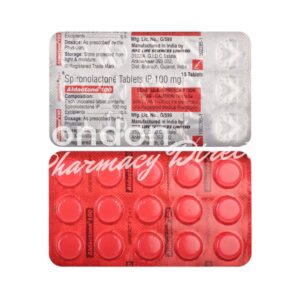
- Forms and dosages: Tablets 25 mg, 50 mg, 100 mg; oral suspension (less common, sometimes compounded by pharmacies); combination tablets with hydroflumethiazide
- Manufacturers in the United Kingdom: Pfizer (Aldactone) and generic manufacturers
- Registration status in the United Kingdom: authorised by the MHRA; prescription-only medicine (POM)
- OTC / Rx classification: Prescription-only medicine (POM)
Initial instructions and warnings for UK patients
Read your prescription label and the MHRA patient leaflet before you start spironolactone.
Spironolactone is a prescription-only medicine in the UK and should be used only under GP or specialist supervision.
Check kidney function and serum potassium before starting and during treatment, and do not take spironolactone if you have unexplained anuria, acute renal insufficiency or known hyperkalaemia.
If you are pregnant, trying for pregnancy, or breastfeeding, discuss the risks with your GP or specialist because pregnancy and lactation need individual assessment.
Carry a complete list of current medicines including over-the-counter remedies and herbal supplements to avoid dangerous interactions.
Store tablets (commonly 25 mg, 50 mg or 100 mg) at 20–25°C in a dry place and away from direct light.
Set phone reminders for daily dosing and for blood-test appointments to keep monitoring on schedule.
Prefer a simple checklist to bring to clinic: medicines list, scheduled blood-test dates and a printed copy of the patient leaflet.
Everyday use and best practices
Morning versus evening dosing
Many people take spironolactone once daily for indications such as hypertension, oedema, heart failure and acne.
Some patients split higher total daily doses (for example 100–200 mg/day) into two doses to reduce side effects.
If nocturia or frequent night-time urination is troublesome, taking the main dose in the morning often helps.
If you feel dizziness or light-headedness on standing, trying an evening dose may reduce daytime symptoms; avoid sudden postural changes.
Always follow the timing advice given by your GP or NHS specialist and consult them before altering dosing times.
Pros/cons of morning versus evening dosing
- Morning dosing — pro: reduces night-time trips to the loo; con: may cause daytime dizziness for some people.
- Evening dosing — pro: may reduce postural dizziness during the day; con: increases nocturia risk.
- Split dosing — pro: smoother effect and fewer peak side effects; con: slightly more complicated routine.
Taking with or without meals (UK diet habits)
Spironolactone may be taken with or without food depending on personal routine.
Taking the tablet with a meal can reduce mild gastrointestinal side effects such as nausea and fits into common UK meal patterns like breakfast or the evening meal.
Avoid taking spironolactone immediately after a very salty or high-potassium meal (for example salted nuts or meals with added potassium-rich salt substitutes) until you know how it affects your potassium.
Keep well hydrated; dehydration during hot UK summers or after intense exercise can amplify dizziness or renal effects.
Food and hydration checklist
- Take with food if you have mild nausea.
- Avoid potassium-based salt substitutes until potassium is stable.
- Drink enough fluids, especially on hot days or during exercise.
Safety priorities
Who should avoid it (MHRA warnings)
Do not use spironolactone in acute renal insufficiency, anuria, Addison’s disease or if you have known hyperkalaemia.
Patients with significant renal impairment, particularly those with creatinine clearance below 30 mL/min, should avoid spironolactone or use it only with extreme caution due to hyperkalaemia risk.
Pregnancy and breastfeeding are relative contraindications and require an individual risk–benefit discussion with your GP or specialist.
Elderly patients usually start at lower doses and require closer monitoring for hyperkalaemia and orthostatic hypotension.
Share all current medicines with your prescriber because ACE inhibitors, ARBs, potassium supplements and some NSAIDs can increase the risk of dangerous hyperkalaemia.
Contraindications and monitoring needs
- Absolute contraindications: acute renal insufficiency, anuria, Addison’s disease, known hypersensitivity, hyperkalaemia.
- Monitor renal function and serum potassium at baseline, within 1–2 weeks of start or dose change, and periodically thereafter.
Activities to limit (driving, work safety)
Spironolactone can cause dizziness or drowsiness, especially when treatment starts.
Avoid driving or operating heavy machinery until you know how spironolactone affects you.
If you work at heights or in safety-critical roles, notify occupational health and arrange temporary restrictions until tolerated.
Alcohol may increase drowsiness and dehydration risk, so limit intake when starting the drug.
Safety steps checklist
- Do not drive until side-effect profile is known.
- Inform workplace or occupational health if your role is safety-critical.
- Avoid excess alcohol during dose-titration.
Dosage and adjustments
General regimen (NHS guidance)
Typical adult dosing varies by indication and should be set by your GP or specialist.
For oedema and cirrhosis doses commonly centre around 100 mg/day with a range of 25–200 mg/day depending on response.
For hypertension, usual doses are 25–100 mg/day, often as an adjunct to other antihypertensives.
Heart failure regimens commonly use low doses such as 12.5–50 mg/day added to guideline therapy.
For acne and hirsutism (off-label) adult doses are usually between 50–200 mg/day with dermatology follow-up.
Start at the lowest effective dose and arrange blood tests for renal function and potassium within 1–2 weeks of starting and after dose changes.
Typical doses by indication and monitoring
- Oedema (CHF/cirrhosis/nephrotic): typical 100 mg/day (range 25–200 mg); monitor electrolytes frequently.
- Hypertension: 25–100 mg/day; check BP and electrolytes.
- Heart failure: 12.5–50 mg/day adjunctive; early renal and potassium checks required.
Special cases (elderly, comorbidities)
Elderly patients should start at low doses such as 12.5–25 mg and increase slowly while closely monitoring potassium and blood pressure.
In renal impairment or severe liver disease, use spironolactone with caution or avoid use; specialist input (nephrology or hepatology) is advisable for complex cases.
Children require specialist-led mg/kg dosing and careful monitoring if spironolactone is considered.
Adjust or stop treatment if potassium rises substantially or if creatinine increases significantly after initiation.
Titration and stopping triggers
- Increase dose only if potassium and renal function remain stable.
- Reduce or stop if potassium is consistently elevated or if symptomatic hypotension occurs.
Legal status and availability in the UK
Spironolactone is a prescription-only medicine (POM) in the UK.
In our online pharmacy, spironolactone is available without a prescription, with discreet delivery to the United Kingdom in 9–21 days.
What’s inside and how it works
Ingredients overview
The active ingredient is spironolactone (International Nonproprietary Name: spironolactone).
Tablets commonly come in 25 mg, 50 mg and 100 mg strengths; combination tablets with hydroflumethiazide (Aldactide) are also available.
Excipients vary by manufacturer — check the patient leaflet if you have known allergies to tablet ingredients.
Common strengths and formulations
- 25 mg, 50 mg and 100 mg tablets.
- Combination tablets with hydroflumethiazide (Aldactide).
- Oral suspension is less common and sometimes compounded by pharmacies.
Mechanism basics explained simply
Spironolactone is an aldosterone antagonist in the ATC class C03DA01 and acts as a potassium-sparing diuretic.
It blocks aldosterone receptors in the kidney, reducing sodium and water retention while helping to conserve potassium.
For hormonal conditions such as acne and hirsutism, spironolactone has anti-androgen effects that reduce sebum production over several months.
Simple mechanism summary
Block aldosterone → less sodium and water retention → reduced fluid overload and lower blood pressure in suitable patients.
Main indications
Approved uses (MHRA listing)
Approved indications include oedema associated with congestive heart failure, cirrhosis and nephrotic syndrome, and adjunctive use in hypertension.
Spironolactone is also used in diagnosing and treating primary hyperaldosteronism and as a low-dose adjunct in certain heart-failure regimens.
MHRA and NHS practice require monitoring of electrolytes and renal function while on therapy.
Indication to dose mapping
- Oedema (CHF/cirrhosis/nephrotic): often 25–200 mg/day, commonly around 100 mg/day with monitoring.
- Hypertension: usually 25–100 mg/day.
- Heart failure: low-dose adjunctive therapy 12.5–50 mg/day.
Off-label uses in UK clinics
Off-label use includes acne and hirsutism in adult women, typically 50–200 mg/day, after discussing risks and arranging monitoring with a clinician.
Specialist teams sometimes use spironolactone off-label for resistant oedema under close supervision and clear documentation.
When prescribed off-label, clinicians should obtain informed consent and outline a monitoring plan.
Off-label consent checklist
- Discuss expected benefits and likely timeline (3–6 months for acne improvement).
- Explain monitoring schedule for blood tests and symptoms to report.
- Document consent and rationale in the clinical record.
Interaction warnings
Food interactions (alcohol, tea/coffee)
There are no major food interactions recorded, but alcohol may increase drowsiness and dehydration risk when starting spironolactone.
Avoid potassium-rich diets and potassium-containing salt substitutes until potassium is stable.
Caffeine from tea or coffee does not directly interact with spironolactone but may affect blood pressure control and diuresis.
Food and hydration tips
- Limit alcohol while initiating therapy.
- Avoid potassium-based salt substitutes until reviewed by your prescriber.
- Maintain regular hydration, especially in hot weather.
Drug conflicts
Key drug interactions include ACE inhibitors, ARBs, potassium supplements, NSAIDs, heparin, and trimethoprim, which can all raise potassium or worsen renal function.
Monitor for signs of hyperkalaemia such as muscle weakness and palpitations; report suspect reactions to your GP without delay.
Report adverse drug reactions via the MHRA Yellow Card scheme to help pharmacovigilance.
High-risk drug interactions and actions
| Concomitant drug | Risk | Monitoring action |
|---|---|---|
| ACE inhibitors / ARBs | Increased hyperkalaemia | Frequent serum potassium checks; consider dose adjustments |
| Potassium supplements / salt substitutes | Marked hyperkalaemia | Avoid unless supervised; check potassium regularly |
| NSAIDs | Reduced renal perfusion and potassium rise | Use with caution; monitor renal function |
| Trimethoprim / heparin | Raised potassium or altered renal function | Check electrolytes shortly after co-prescription |
Alternative choices
NHS prescribing alternatives with pros/cons checklist
Alternatives to spironolactone include eplerenone, amiloride, triamterene, thiazide diuretics and loop diuretics depending on the clinical need.
Eplerenone is an aldosterone antagonist with fewer hormonal effects.
Amiloride and triamterene are potassium-sparing but generally less potent than spironolactone.
Thiazide and loop diuretics are options for hypertension and volume overload but have different electrolyte and metabolic profiles.
Pros/cons
- Spironolactone — pro: effective, with a long track record; con: hormonal effects in some patients.
- Eplerenone — pro: fewer anti-androgen side effects; con: still needs potassium monitoring.
- Amiloride/triamterene — pro: potassium-sparing; con: generally less effective for aldosterone-driven fluid retention.
- Thiazides/loop diuretics — pro: effective for volume control; con: can cause sodium or potassium disturbances.
When to discuss switching
Discuss switching with your GP or specialist if you develop troublesome hormonal side effects such as gynaecomastia or sexual dysfunction.
Persistent hyperkalaemia despite dose changes or intolerable renal function changes are also reasons to consider alternatives.
A supervised trial off spironolactone with monitoring or a direct switch to an alternative under clinical supervision may be advised.
Decision checklist for GP discussion
- Document side effects and lab results showing hyperkalaemia or renal decline.
- Discuss alternative agents and monitoring plans.
- Plan follow-up blood tests after any change.
Regulation snapshot
MHRA approval and NHS prescribing framework
Spironolactone is a prescription-only medicine in the UK, authorised by the MHRA, and is used within NHS formularies depending on clinical indication.
Prescribing requires baseline and follow-up blood tests for renal function and electrolytes and documentation of the indication and monitoring plan.
Community pharmacists play a key role in dispensing and counselling on interactions and monitoring.
Safety reporting and recalls
Report suspected adverse reactions using the MHRA Yellow Card scheme to support national safety monitoring.
Pharmacists and GPs will communicate safety updates, and manufacturers may issue batch recalls via MHRA channels if required.
Steps if you want to report or respond to a recall
- Report side effects via the Yellow Card scheme online or through your pharmacist.
- If a recall is announced, follow instructions from the pharmacy or MHRA; return affected products to the dispensing pharmacy if directed.
- Contact your GP for medical advice if side effects are serious.
Frequently asked questions
Common UK patient questions
Q: Will spironolactone make me need the loo more?
A: Often yes initially; expect increased diuresis in the first days to weeks as the body adjusts.
Q: How often are blood tests needed?
A: Baseline, then within 1–2 weeks after starting or changing dose, and periodically thereafter with frequency based on individual risk.
Q: Can I take it with my ACE inhibitor?
A: It can be prescribed with ACE inhibitors but requires close monitoring because the combination increases hyperkalaemia risk.
Q: Is it safe for acne?
A: Spironolactone is used off-label for acne in adult women with informed consent and monitoring.
When to call NHS 111 or your GP
Seek urgent advice via 111 or GP/ED if you have severe dizziness, fainting, chest pain, palpitations, muscle weakness or other signs suggestive of severe hyperkalaemia.
For non-urgent concerns such as side-effect queries, prescription refills or routine questions, contact your GP or local pharmacy.
Emergency versus non-urgent checklist
- Emergency: severe chest pain, fainting, sudden weakness, severe palpitations.
- Non-urgent: routine side effects, repeat prescriptions, blood-test scheduling.
Guidelines for proper use
UK pharmacist counselling style
Pharmacists should confirm the indication, explain dosing and likely side effects, and advise on diet such as avoiding potassium supplements and salt substitutes.
Arrange reminders for blood tests and flag drug interactions to prescribers if needed.
Provide printed leaflets or NHS website links and document counselling in the patient record.
Pharmacist counselling checklist
- Confirm indication and dosing.
- Explain monitoring schedule for blood tests.
- Check for interacting medicines and allergies.
- Provide written information and follow-up advice.
NHS patient support advice
Keep appointments for blood monitoring and carry a medicines list to every clinical visit.
Report adverse events via the Yellow Card scheme and use NHS repeat prescription services.
Ask practice nurses for blood pressure checks and medication reviews as needed.
Patient preparation checklist for GP/pharmacy visits
- Bring a list of all medicines and supplements.
- Note any side effects or symptoms to report.
- Record recent blood-test results and dates.
Delivery across the United Kingdom
| City | Region | Delivery Time |
|---|---|---|
| London | England | 9–21 days |
| Manchester | England | 9–21 days |
| Birmingham | England | 9–21 days |
| Glasgow | Scotland | 9–21 days |
| Edinburgh | Scotland | 9–21 days |
| Cardiff | Wales | 9–21 days |
| Belfast | Northern Ireland | 9–21 days |
| Liverpool | England | 9–21 days |
| Leeds | England | 9–21 days |
| Sheffield | England | 9–21 days |
| Newcastle | England | 9–21 days |
| Bristol | England | 9–21 days |
| Nottingham | England | 9–21 days |
| Southampton | England | 9–21 days |