Cefalexin
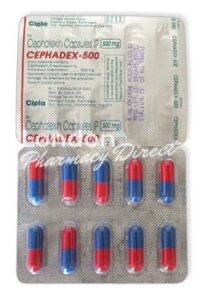
In brief
- In our pharmacy, you can buy cefalexin without a prescription, with delivery in 9–21 days throughout the United Kingdom. Discreet and anonymous packaging.
- Cefalexin is used to treat susceptible bacterial infections such as respiratory tract infections, skin and soft‑tissue infections, uncomplicated urinary tract infections and streptococcal pharyngitis; it is a first‑generation cephalosporin that works by inhibiting bacterial cell‑wall synthesis via binding to penicillin‑binding proteins, causing bacterial lysis.
- The usual dose for adults is 250–500 mg every 6 hours (500 mg every 12 hours is used in some streptococcal pharyngitis regimens for 10 days); for children the usual dose is 25–50 mg/kg/day divided into several doses (use the oral suspension for accurate dosing).
- Form of administration: oral — tablets and capsules (250 mg, 500 mg) and oral suspension (commonly 125 mg/5 ml and 250 mg/5 ml), plus powder for reconstitution.
- Onset time: clinical effect typically begins within 30–60 minutes after an oral dose, with peak blood levels around one hour.
- Duration of action: the antibacterial effect is generally maintained for about 6–8 hours (hence usual dosing every 6–8 hours); typical treatment courses last 7–14 days depending on the infection.
- Alcohol warning: avoid excessive alcohol while taking cefalexin — alcohol may worsen gastrointestinal side effects and impede recovery; consult your healthcare professional for personalised advice.
- The most common side effect is diarrhoea; other frequent effects include nausea, vomiting, abdominal pain and rash.
- Would you like to try cefalexin without a prescription?
Basic Cefalexin information
- INN (international nonproprietary name): Cefalexin
- Brand names available in the United Kingdom: Keflex; generic cefalexin
- ATC code: J01DB01 (systemic antibacterials, β‑lactam antibiotics, first‑generation cephalosporins)
- Forms and dosages: Capsules/tablets 250 mg, 500 mg; oral suspension 125 mg/5 ml, 250 mg/5 ml (powder for reconstitution)
- Manufacturers in the United Kingdom: Various generic manufacturers
- Registration status in the United Kingdom: Prescription-only medicine (POM), listed in the BNF
- OTC / Rx classification: Prescription-only medicine (POM)
Important safety and daily integration
- Follow the NHS prescription exactly and finish the course unless told otherwise by your prescriber.
- Do not share antibiotics or reuse leftovers; cefalexin is a prescription‑only medicine (check MHRA guidance and your local NHS formulary).
- Stop and seek urgent care if you develop breathing difficulties, facial swelling, a severe rash or jaundice — these may signal a severe hypersensitivity or liver reaction.
- Report any suspected adverse reaction to the MHRA Yellow Card scheme.
- Set phone alarms or use a pill organiser to keep regular dosing times and reduce missed doses.
- Keep reconstituted suspensions refrigerated and discard after 14 days.
- Store tablets at 15–30°C in the original packaging and protect from light and moisture.
- Pharmacists can advise on storage and provide measuring syringes for suspensions.
- If pregnant or breastfeeding, discuss risks and benefits with your prescriber; cefalexin is generally used only if clearly needed.
- If you have kidney disease, dosing may be adjusted — bring recent blood test results to the prescriber or pharmacy.
- Keep a written list of common side effects and emergency contacts and present this at the pharmacy or to NHS 111 if unsure.
Everyday use and best practices
Morning vs evening dosing
Worried about missing doses during a busy workday?
Typical regimens are 250–500 mg every six hours, or 500 mg every 12 hours for some indications.
Match dosing times to daily anchors such as breakfast, lunch, dinner and bedtime to reduce missed doses.
- Four‑times‑daily example: 07:00 (breakfast), 13:00 (lunch), 19:00 (dinner), 23:00 (bedtime).
- Twice‑daily example (500 mg every 12 hours): 07:00 and 19:00 to fit commuting and work hours.
- For shift workers, choose two consistent 12‑hour apart times that suit your roster.
- Parents: give doses around meals and before naps to keep a steady routine for children.
Taking with or without meals (UK diet habits)
Cefalexin may be taken with or without food, as absorption is not significantly affected by meals.
If you feel nauseous on an empty stomach, take your dose with a light UK‑style snack such as toast or porridge to improve tolerance.
Avoid taking it immediately with very strong black tea or coffee if you notice stomach upset, as caffeine can sometimes aggravate nausea.
For children, use the oral suspension and the pharmacy dosing syringe for accurate measurement; common concentrations are 125 mg/5 ml and 250 mg/5 ml.
Reconstituted suspension must be refrigerated and used within 14 days.
Safety priorities
Who should avoid it (MHRA warnings)
Who must not take cefalexin?
- Anyone with a known allergy to cefalexin, other cephalosporins or a previous immediate hypersensitivity to β‑lactams (including anaphylaxis) should avoid it.
- People with severe renal impairment need dose adjustment or alternative therapy; discuss creatinine clearance with your prescriber.
- Those with a history of antibiotic‑associated colitis or severe gastrointestinal disease should be monitored closely.
- Pregnant or breastfeeding patients should use cefalexin only if the prescriber judges the benefits outweigh the risks.
- Report severe or unexpected reactions via the MHRA Yellow Card scheme.
Activities to limit (driving, work safety)
Cefalexin rarely impairs alertness, but side effects may affect safety‑critical tasks.
| Contraindications / cautions | Activities / advice |
|---|---|
| Known β‑lactam allergy | Avoid taking; discuss alternatives with prescriber. |
| Severe renal impairment | Dose adjustment; avoid heavy physical exertion if dizzy or fatigued. |
| Any dizziness, severe fatigue | Avoid driving or operating heavy machinery until recovered. |
| Diarrhoea during or after treatment | Stop and seek advice; risk of Clostridioides difficile infection. |
Dosage and adjustments
General regimen (NHS guidance)
What dose will you likely receive?
Standard adult dosing for many respiratory and skin infections is 250–500 mg every 6 hours.
Streptococcal pharyngitis is often treated with 500 mg every 12 hours for 10 days.
Children are dosed by weight at 25–50 mg/kg/day divided into appropriate doses.
| Condition | Adult dose | Paediatric dose | Typical duration |
|---|---|---|---|
| Respiratory infections | 250–500 mg every 6 hours | 25–50 mg/kg/day in divided doses | 7–14 days |
| Skin / soft tissue | 250–500 mg every 6 hours | 25–50 mg/kg/day in divided doses | 7–14 days |
| Uncomplicated UTI | 250–500 mg every 6 hours | 25–50 mg/kg/day in divided doses | 5–7 days (varies) |
| Streptococcal pharyngitis | 500 mg every 12 hours | 25–50 mg/kg/day in divided doses | 10 days |
Special cases (elderly, comorbidities)
Elderly patients generally use standard adult doses but require monitoring of renal function and hydration.
For renal impairment, doses are reduced or the dosing interval is extended according to creatinine clearance; consult product prescribing information.
No routine hepatic adjustment is usually needed, but clinical monitoring is advised for patients with liver disease.
Pharmacists can review concomitant medicines and provide adherence aids such as pill organisers and dosing syringes for suspensions.
Legal status and availability in the UK
Cefalexin is a prescription-only medicine (POM) in the UK.
In our online pharmacy, cefalexin is available without a prescription, with discreet delivery to the United Kingdom in 9–21 days.
What’s inside and how it works
Ingredients overview
What forms will you see at the pharmacy?
| Form | Common strengths |
|---|---|
| Tablets / capsules | 250 mg, 500 mg |
| Oral suspension | 125 mg/5 ml, 250 mg/5 ml (powder for reconstitution) |
Excipients vary by brand; check the patient information leaflet for allergens such as lactose.
Mechanism basics explained simply
How does cefalexin fight infection?
Cefalexin is a first‑generation cephalosporin that interferes with bacterial cell wall synthesis, causing susceptible bacteria to die.
It is most effective against many Gram‑positive organisms and certain Gram‑negative bacteria, which explains its role in respiratory, skin and urinary tract infections.
Its ATC classification is J01DB01, which places it among systemic, first‑generation β‑lactam cephalosporins.
Main indications
Approved uses (MHRA listing)
What is cefalexin commonly prescribed for?
| Condition | Typical adult dose | Typical duration |
|---|---|---|
| Respiratory tract infections | 250–500 mg every 6 hours | 7–14 days |
| Skin and soft tissue infections | 250–500 mg every 6 hours | 7–14 days |
| Uncomplicated urinary tract infection | 250–500 mg every 6 hours | 5–7 days (varies) |
| Streptococcal pharyngitis | 500 mg every 12 hours | 10 days |
Off‑label uses in UK clinics
Clinicians may use cefalexin off‑label when microbiology indicates susceptibility and alternatives are unsuitable.
It is not usually first‑line for dental prophylaxis and specialist advice is recommended for prophylactic uses.
Hospital teams may choose different agents or IV therapy for severe or resistant infections in line with stewardship principles.
Interaction warnings
Food interactions (alcohol, tea/coffee)
Food does not significantly affect absorption, so you may take cefalexin with meals to reduce stomach upset.
There is no direct interaction with alcohol, but heavy drinking while unwell can worsen dehydration and side effects; avoid excess alcohol.
Strong tea or coffee has no formal interaction, but if caffeine aggravates stomach upset for you, take doses with a light snack instead.
Drug conflicts
Serious drug–drug interactions are uncommon, but some medicines affect kidney function and so may influence cefalexin levels in renal impairment.
| Notable co‑medication | Action / advice |
|---|---|
| Probenecid (and some combination products) | Can raise cefalexin levels. |
| Nephrotoxic drugs | Use caution in renal impairment and monitor renal function. |
Report suspected interactions or adverse events to the MHRA Yellow Card scheme and discuss medication lists with your pharmacist.
Alternative choices
NHS prescribing alternatives with pros/cons checklist
What if cefalexin is not suitable?
- Amoxicillin — pros: reliable Gram‑positive coverage; Cons: not for penicillin‑allergic patients.
- Clarithromycin / azithromycin (macrolides) — pros: options for penicillin allergy; Cons: GI upset and drug interactions (check statins).
- Cefadroxil — pros: similar spectrum to cefalexin with longer half‑life allowing once or twice daily dosing; Cons: still a cephalosporin so cross‑reactivity possible.
- Nitrofurantoin or trimethoprim — pros: recommended options for uncomplicated UTI depending on local susceptibility; Cons: not suitable for some patients with renal impairment or other contraindications.
Always check NHS formularies and local microbiology before switching antibiotics.
Regulation snapshot
MHRA approval and NHS prescribing framework
How is cefalexin regulated in the UK context?
| Regulatory point | Details |
|---|---|
| Approval status | Cefalexin is a prescription‑only medicine and is listed in national formularies. |
| Safety monitoring | MHRA monitors safety via the Yellow Card scheme; pharmacists and prescribers report adverse events. |
| Prescribing rules | Prescribers should follow local antimicrobial stewardship policies; repeat supplies require clinical review. |
Delivery across the United Kingdom
| City | Region | Delivery time |
|---|---|---|
| London | England | 9–21 days |
| Manchester | England | 9–21 days |
| Birmingham | England | 9–21 days |
| Leeds | England | 9–21 days |
| Glasgow | Scotland | 9–21 days |
| Edinburgh | Scotland | 9–21 days |
| Bristol | England | 9–21 days |
| Newcastle | England | 9–21 days |
| Cardiff | Wales | 9–21 days |
| Belfast | Northern Ireland | 9–21 days |
| Norwich | England | 9–21 days |
| Southampton | England | 9–21 days |
| Exeter | England | 9–21 days |
| Stirling | Scotland | 9–21 days |
Frequently asked questions
Common UK patient questions
- Can I get cefalexin without a prescription? No — cefalexin is prescription‑only in the UK; contact NHS 111 or your GP for assessment.
- Can I drink alcohol while taking cefalexin? Moderate alcohol is not directly contraindicated, but avoid heavy drinking while unwell as it may worsen side effects.
- What if I miss a dose? Take it as soon as you remember; if it is close to the next dose, skip the missed one — do not double up.
- How long do I keep the suspension? Reconstituted oral suspension should be refrigerated and discarded after 14 days.
If symptoms fail to improve within 48–72 hours or get worse, contact your GP or NHS 111 for review.
Guidelines for proper use
UK pharmacist counselling style
What will your pharmacist tell you when dispensing cefalexin?
- Confirm the indication and check for allergies, especially to β‑lactams and penicillin.
- Explain the dosing schedule and the importance of finishing the prescribed course unless advised otherwise.
- Discuss common side effects such as gastrointestinal upset, rash and the possibility of candidiasis.
- Advise on storage: tablets 15–30°C; reconstituted suspension refrigerated and discarded after 14 days.
- Provide practical aids such as dosing syringes for suspensions and pill organisers for multi‑dose regimens.
- Review other medicines for interactions and discuss pregnancy or breastfeeding considerations.
NHS patient support advice
NHS advice focuses on safety, stewardship and access to support services.
- Finish the course unless instructed otherwise, and return for review if no improvement in 48–72 hours.
- Report severe diarrhoea, allergic reactions or other worrying symptoms promptly.
- Use NHS 111 for after‑hours advice and the MHRA Yellow Card to report adverse reactions.
- Pharmacists can advise on safe disposal of leftovers and offer measuring devices for paediatric suspensions.