Feldene
In brief
- In our pharmacy you can buy Feldene without a prescription, with delivery in 9–21 days throughout the United Kingdom. Discreet and anonymous packaging.
- Feldene (piroxicam) is used for osteoarthritis, rheumatoid arthritis and ankylosing spondylitis; it is a non‑steroidal anti‑inflammatory drug (an oxicam) that inhibits cyclo‑oxygenase (COX) enzymes and reduces prostaglandin synthesis to relieve pain and inflammation.
- The usual dose is 20 mg once daily (maximum 20 mg/day); some patients respond to 10 mg once daily and dosing may be split into 2 × 10 mg to reduce gastrointestinal disturbance.
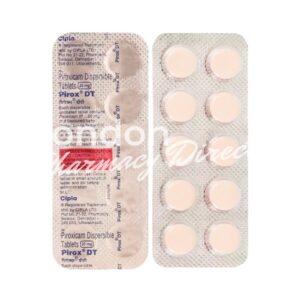
- Forms of administration include oral capsules and tablets (10 mg, 20 mg), dispersible 20 mg tablets and topical gel.
- Onset of effect is typically within 30–60 minutes, with peak plasma concentrations occurring around 2–5 hours after oral dosing.
- Duration of action supports once‑daily dosing; piroxicam has a long half‑life (~50 hours) so effects may persist and the drug can accumulate with repeated dosing.
- Avoid alcohol while taking feldene as it increases the risk of gastrointestinal bleeding and liver harm.
- The most common side effect is gastrointestinal upset (nausea, dyspepsia, abdominal pain); other frequent effects include headache, dizziness, skin rash and oedema.
- Would you like to try Feldene without a prescription?
Basic Feldene information
- INN (international nonproprietary name): Piroxicam
- Brand names available in the United Kingdom: Feldene (capsules 10 mg, 20 mg) and generic piroxicam products
- ATC code: M01AC01
- Forms and dosages: Capsules/tablets 10 mg and 20 mg; dispersible 20 mg tablets; topical gel
- Manufacturers in the United Kingdom: Pfizer (Feldene) and generic manufacturers such as Sandoz, Teva and Mylan
- Registration status in the United Kingdom: Registered with the MHRA as a prescription medicine
- OTC / Rx classification: Prescription-only medicine (POM)
Everyday use and best practices
What time of day should I take Feldene to get the best result for my routine?
Morning vs evening dosing
Piroxicam has a long half-life of around 50 hours, which supports once-daily dosing.
Taking the medicine at the same time each day helps maintain steady levels and reduces missed doses.
Choose morning dosing if stiffness or pain limits morning mobility, for example with stiff knees on getting out of bed.
Choose evening dosing if pain regularly wakes you or disturbs sleep so that the peak effect covers night-time symptoms.
Agree a routine and any change of dose timing with your GP or pharmacist because the prescription is reviewed regularly.
Do not exceed the prescribed maximum of 20 mg per day.
- Daily routine checklist:
- Take the prescribed dose at the same time each day (10 mg or 20 mg as issued by your GP).
- Decide with your GP whether morning or evening dosing fits your symptoms best.
- Never exceed 20 mg in 24 hours.
- If you forget a dose, take it when you remember unless the next dose is due soon; do not double up.
| Option | Pros | Cons |
|---|---|---|
| Morning dosing | Helps morning mobility and daytime function. | May cause daytime dizziness in some people. |
| Evening dosing | Can reduce night-time pain and improve sleep. | Side effects may affect morning alertness; longer overnight exposure. |
Taking with or without meals (UK diet habits)
Piroxicam may irritate the stomach, so taking it with food reduces the chance of gastrointestinal upset.
Take the capsule after a substantial snack or after breakfast such as porridge, toast and tea if you are in the UK.
If you normally drink strong tea or coffee, space your caffeine intake from the dose if you notice dizziness.
Avoid alcohol while taking piroxicam because alcohol increases the risk of gastric bleeding with NSAIDs.
If you take the medicine on an empty stomach and feel nausea, take the next dose with food instead.
Safety priorities
Who should not take Feldene and what safety checks will your GP do?
Who should avoid it (MHRA warnings)
Do not take piroxicam if you have a known hypersensitivity to piroxicam or other NSAIDs.
It is contraindicated for patients with active peptic ulcer disease or recent gastrointestinal bleeding.
Avoid use in severe heart failure, severe hepatic impairment or severe renal impairment.
Piroxicam must not be given after coronary artery bypass graft (CABG) surgery.
Pregnancy is a contraindication, particularly in the third trimester.
Activities to limit (driving, work safety)
Piroxicam can cause dizziness, drowsiness or visual disturbance in some people.
Avoid driving, cycling or operating heavy machinery until you know how the medicine affects you.
If your job is manual or safety-critical, get written advice from your GP or occupational health.
- Absolute contraindications:
- Known hypersensitivity to piroxicam or NSAIDs.
- Active peptic ulcer or recent GI bleeding.
- Severe heart failure, severe hepatic or renal impairment.
- Recent CABG surgery and pregnancy (especially third trimester).
- Relative contraindications (require monitoring):
- History of kidney or liver dysfunction.
- Hypertension or heart disease that needs review.
- Concurrent use of anticoagulants, antiplatelet agents or systemic corticosteroids.
- Elderly patients due to higher GI and renal risks.
| Activity | Advice |
|---|---|
| Driving / operating machinery | Avoid until you know how piroxicam affects you. |
| Manual work / safety-critical tasks | Obtain written clearance if symptoms such as dizziness occur. |
Dosage and adjustments
What dose is usually prescribed and how will your GP adjust it for you?
General regimen (NHS guidance)
The typical adult dose for osteoarthritis or rheumatoid arthritis is 20 mg once daily with a maximum of 20 mg per day.
Some patients respond to 10 mg once daily, and GPs may start at a lower dose to assess tolerance.
GPs normally review the need for ongoing NSAID therapy every 2–3 months.
Do not self-adjust the dose without consulting your GP.
Special cases (elderly, comorbidities)
Use the lowest effective dose in older adults and monitor renal and liver function because elimination may be prolonged.
Consider splitting into 2 × 10 mg doses if gastrointestinal symptoms occur, but only on GP advice.
Avoid piroxicam in significant renal or hepatic impairment; for mild impairment a dose reduction or alternative therapy is often recommended.
Piroxicam is not generally recommended for children as safety and efficacy are not established.
Consider co-prescribing a proton pump inhibitor (PPI) for gastroprotection in high-risk patients.
| Indication | Usual dose | Max dose | Monitoring |
|---|---|---|---|
| Osteoarthritis | 20 mg once daily (some respond to 10 mg) | 20 mg/day | Review every 2–3 months; renal/liver tests if risk factors present |
| Rheumatoid arthritis | 20 mg once daily | 20 mg/day | Consider baseline and periodic blood tests; monitor GI symptoms |
Legal status and availability in the UK
Feldene is a prescription-only medicine (POM) in the UK.
In our online pharmacy, Feldene is available without a prescription, with discreet delivery to the United Kingdom in 9–21 days.
What’s inside and how it works
What are the ingredients and how does Feldene reduce pain?
Ingredients overview
The active ingredient is piroxicam (INN).
Feldene is available as 10 mg and 20 mg capsules or tablets, and dispersible 20 mg tablets in some presentations.
Piroxicam is also available as a topical gel.
Excipients differ by manufacturer; always check the package leaflet if you have known allergies to any excipient.
Mechanism basics explained simply
Piroxicam is a non-steroidal anti-inflammatory drug (NSAID) of the oxicam class that works by inhibiting cyclooxygenase enzymes (COX), reducing prostaglandin production that drives inflammation and pain.
The long half-life of roughly 50 hours gives prolonged symptom control and supports once-daily dosing.
That long half-life also means adverse effects may persist for several days after stopping the medicine.
Topical gels offer local relief with lower systemic exposure compared with oral capsules or tablets.
| Form | Systemic exposure | Typical use |
|---|---|---|
| Oral capsules/tablets | Higher systemic exposure | Generalised inflammatory joint pain, arthritis |
| Topical gel | Lower systemic exposure | Localised musculoskeletal pain |
- Excipients to check:
- Any declared dyes or lactose if you have known intolerance.
- Preservatives in topical formulations where relevant.
Main indications
What is piroxicam licensed for, and when might clinicians use it off-label?
Approved uses (MHRA listing)
Piroxicam is indicated for osteoarthritis, rheumatoid arthritis and ankylosing spondylitis where anti-inflammatory therapy is required.
Long-term treatment is usually reviewed every 2–3 months and the aim is symptom control at the lowest effective dose.
Prescribers may choose piroxicam when other NSAIDs are ineffective or unsuitable for an individual patient.
Off-label uses in UK clinics
Piroxicam is not recommended for acute pain or acute gout; any use outside its licence is clinician-directed and documented.
Any off-label use should be explained to the patient and monitored appropriately.
- Indication vs contraindication checklist:
- Suitable for osteoarthritis and rheumatoid arthritis if no contraindication.
- Not suitable with active peptic ulcer, severe heart/renal/hepatic disease, pregnancy or post-CABG.
| Decision factor | Considerations |
|---|---|
| Patient comorbidities | GI, cardiac and renal risks influence choice of NSAID. |
| Prior NSAID response | Previous good response may favour piroxicam; prior adverse events may suggest alternatives. |
Interaction warnings
What should you avoid eating or taking with Feldene and what interactions are most important?
Food interactions (alcohol, tea/coffee)
Alcohol increases the risk of gastrointestinal bleeding when combined with NSAIDs and should be minimised or avoided while taking piroxicam.
Caffeine from tea or coffee does not directly interact pharmacologically but may exaggerate jitteriness or mask dizziness; space strong caffeine if you notice problems.
Drug conflicts
Major drug interactions include anticoagulants and antiplatelets such as warfarin or DOACs, where the risk of bleeding is increased.
Concurrent use with other NSAIDs or systemic steroids raises gastrointestinal risk.
ACE inhibitors, angiotensin receptor blockers and diuretics may have reduced renal effectiveness when combined with NSAIDs.
Certain antidepressants can increase bleeding risk when used with NSAIDs and should be checked with your GP or pharmacist.
Report suspected serious interactions or adverse events via the MHRA Yellow Card scheme.
- High-risk drug interactions:
- Warfarin and other oral anticoagulants.
- Aspirin and other NSAIDs.
- Systemic corticosteroids.
- ACE inhibitors, ARBs and diuretics.
- Certain antidepressants that increase bleeding risk.
- Checklist for your prescriber:
- List all prescribed medicines, over-the-counter drugs and herbal supplements.
- Mention any alcohol use and recent stomach or kidney problems.
- Bring current medication packaging to appointments.
Alternative choices
What are the common NHS alternatives and how do they compare to Feldene?
Choice of alternative depends on desired onset, dosing convenience and the patient’s GI, cardiac and renal risk profile.
- Ibuprofen: OTC at low doses, shorter half-life and useful for short-term pain but may require multiple daily doses.
- Naproxen: Longer effect than ibuprofen but carries cardiovascular caution in some patients.
- Diclofenac: Effective for many types of pain but has cardiovascular concerns with long-term use.
- Meloxicam: Once-daily prescription NSAID with possibly lower GI risk; used as an alternative in some patients.
- Topical NSAIDs: Lower systemic exposure and suitable for localised joint pain, for example diclofenac gel.
| Scenario | Recommended option | Rationale |
|---|---|---|
| High GI risk | Topical NSAID or meloxicam | Lower systemic exposure or potentially lower GI risk |
| Need short-term fast relief | Ibuprofen or naproxen | Faster onset; choose lowest effective duration |
Discuss suitability with your GP or pharmacist before switching.
Regulation snapshot
How is piroxicam regulated in the UK and what does that mean for prescribing?
Piroxicam (INN) is a prescription-only medicine registered with the MHRA.
Prescribers follow national guidance to assess risks, document indications and review ongoing need on a regular basis—commonly every 2–3 months for chronic use.
Electronic prescribing and repeat dispensing are common in the NHS, and community pharmacists often liaise with prescribers about generics or repeat authorisations.
Report adverse events through the MHRA Yellow Card scheme; serious unexpected reactions should be escalated promptly.
Prescribing flow
- Assessment of indication and risk factors.
- Prescription issued by GP with dose and review interval.
- Regular monitoring of renal, liver function and blood pressure as indicated.
Frequently asked questions
Here are quick answers to common patient questions in the UK.
| Question | Answer |
|---|---|
| Can I take Feldene with my blood pressure tablets? | Some blood pressure medicines such as ACE inhibitors, ARBs and diuretics interact; speak to your GP for monitoring of blood pressure and renal function. |
| Can Feldene be prescribed on the NHS? | Feldene is a prescription-only medicine and can be prescribed on the NHS. |
| How soon will it start to work? | Some patients notice relief within a few days; the full anti-inflammatory effect may take longer because of the long half-life (~50 hours). |
| Can I stop it suddenly? | You can stop, but discuss with your GP if you have used it long-term so that symptom recurrence is managed; side effects may persist for days after stopping. |
- When to call your GP:
- If you notice black or tarry stools or severe abdominal pain.
- If you develop shortness of breath, sudden swelling or a widespread rash.
- If you have fainting, severe dizziness or sudden changes in urine output.
Guidelines for proper use
What should a pharmacist cover when counselling a patient starting piroxicam?
UK pharmacist counselling style
Confirm the indication and the prescribed dose (10 mg or 20 mg, max 20 mg/day).
Ask about current medicines including OTC products and herbal supplements, allergies, pregnancy or breastfeeding and alcohol use.
Explain how to take with food to reduce GI upset and warn about signs of serious side effects such as black stools, severe abdominal pain, or swelling.
Advise patients to stop the medicine and seek urgent care if they develop severe allergic reactions or signs of internal bleeding.
Document counselling and remind patients about the MHRA Yellow Card scheme for reporting serious adverse events.
NHS patient support advice
Discuss repeat dispensing if appropriate.
Signpost to local NHS services such as physiotherapy, weight-management programmes and falls prevention for elderly patients.
Provide a written checklist that includes dose, side effects to watch for, who to contact (GP, 111, out-of-hours or emergency services) and storage instructions.
Storage advice: store around 25°C (allowable 15–30°C), keep in original packaging away from moisture and direct sunlight.
- Printable pharmacy counselling checklist:
- Confirm name and dose of medicine.
- Record current medicines and allergies.
- Explain dosing time, food advice and alcohol warning.
- Provide contact details for problems and Yellow Card reporting link.
Delivery across the United Kingdom
| City | Region | Delivery Time |
|---|---|---|
| London | Greater London | 9–21 days |
| Birmingham | West Midlands | 9–21 days |
| Manchester | Greater Manchester | 9–21 days |
| Glasgow | Scotland | 9–21 days |
| Liverpool | Merseyside | 9–21 days |
| Bristol | South West England | 9–21 days |
| Leeds | West Yorkshire | 9–21 days |
| Edinburgh | Scotland | 9–21 days |
| Sheffield | South Yorkshire | 9–21 days |
| Newcastle | North East England | 9–21 days |
| Belfast | Northern Ireland | 9–21 days |
| Cardiff | Wales | 9–21 days |
| Plymouth | Devon | 9–21 days |