Rybelsus
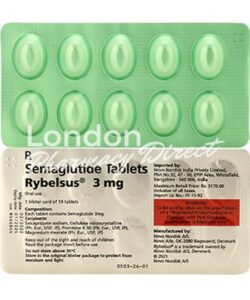
In stock
3mg · 7mg · 14mg
from 160,30 £
In brief
- Rybelsus brings semaglutide, a GLP-1 receptor agonist, to adults with type 2 diabetes as a once-daily tablet rather than an injection.
- Three strengths (3 mg, 7 mg, 14 mg) can be ordered, and each is available as 10, 20, 30, 60 or 90 tablets.
- Legal category POM. In the UK the 3, 7 and 14 mg strengths belong to a superseded formulation; current tablets are 1.5, 4 and 9 mg.
Rybelsus: GLP-1 therapy without an injection
Rybelsus turns semaglutide, a medicine normally given by injection, into something that is swallowed. Semaglutide imitates GLP-1, a hormone from the gut that tells the pancreas to release insulin only when blood glucose is raised, holds back glucagon and slows the emptying of the stomach. Most drugs in this class are injected. Here semaglutide is paired with salcaprozate sodium, an absorption enhancer that helps a small fraction of each dose pass through the stomach lining. Because absorption is so limited, the manner of taking the tablet matters greatly. A half-life of about a week means one tablet daily is enough.
Who it is meant for
Doctors use Rybelsus for adults with type 2 diabetes that is not under control despite diet and exercise. It can be the only glucose-lowering medicine for those who cannot take metformin, or be added to other diabetes treatments, insulin included. It does nothing for type 1 diabetes and cannot treat diabetic ketoacidosis.
Old tablets, new tablets
Strengths of 3 mg, 7 mg and 14 mg were those of Rybelsus when it first reached the UK, and the electronic medicines compendium now marks that version as discontinued. British pharmacies now deal with a reformulated tablet of 1.5 mg, 4 mg and 9 mg, intended to replace the older ones in that order: 1.5 mg for 3 mg, 4 mg for 7 mg and 9 mg for 14 mg. The numbers differ though the effect is meant to match, so anyone switching between the series should ask a prescriber or pharmacist which strength to take rather than comparing milligrams. The tablets offered here are imported.
From first dose to maintenance dose
Treatment opens with 3 mg once daily for 30 days, a mild start that lets the gut adjust. After that, 7 mg is the dose. If control is still short of target after at least a further month, 14 mg is the highest step. The SmPC allows a single tablet each day. Swapping in two weaker tablets for one stronger has never been tested, so it is not advised. A missed dose is simply left out. The dose stays the same whatever the person’s age or kidney function. The exception is a patient who also uses insulin or a sulfonylurea, where those medicines may be lowered to keep hypoglycaemia at bay.
Taking the tablet properly
Each Rybelsus tablet goes down whole, on waking, with an empty stomach and no more than 120 ml (half a glass) of plain water. Nothing else, whether food, drink or other oral medicine, should pass the lips for another 30 minutes. It stays in its blister until needed, since the pack shields it from light and moisture. Levothyroxine exposure may increase, so thyroid blood tests could be repeated, and people on warfarin may need closer INR checks at the start.
What to watch for
Hypersensitivity is the sole contraindication, though the SmPC advises care with pancreatitis, diabetic retinopathy in insulin users, NYHA class IV heart failure, gastroparesis, bariatric surgery in the past and dehydration, and the anaesthetist should be told before any procedure. Reliable contraception is advised; if a pregnancy is planned, semaglutide has to be discontinued at least eight weeks beforehand, and breastfeeding mothers should not use it. Over one in ten people has nausea or diarrhoea, and low blood sugar is as frequent where insulin or a sulfonylurea is also taken. Commonly reported are vomiting, tummy pain, a swollen abdomen, constipation, heartburn, flatulence, reduced appetite, fatigue, headache and dizziness. Gallstones, belching, altered taste and a faster pulse are uncommon; pancreatitis and anaphylaxis rare. It is for the prescriber to say whether Rybelsus belongs in a person’s diabetes plan.