Tamoxifen
In brief
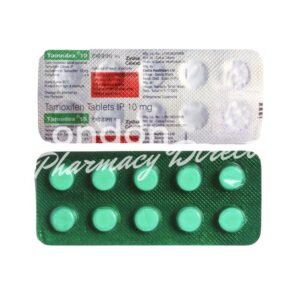
- Tamoxifen is on the London Pharmacy Direct shelf in two tablet strengths, 10mg and 20mg; every pack size from 30 up to 360 is offered, and parcels arrive in the UK within 9–21 days.
- It sits on oestrogen receptors in breast tissue and prevents the hormone from driving tumour growth, which makes it a standard option after surgery for oestrogen-receptor-positive breast cancer and for advanced disease.
- Both strengths here, 10mg and 20mg, are licensed in the UK; take the tablet at about the same hour every day and use non-hormonal contraception, as pregnancy must be avoided during treatment.
- Treatment carries a small extra chance of thrombosis and of thickening of the endometrium; unexplained vaginal bleeding should therefore be reported, and so should any operation or journey that keeps you seated for hours.
- Menopausal-type flushes, queasiness, calf cramps and mild hair thinning are among the effects described, while any abrupt loss or blurring of sight calls for quick review. Under UK rules tamoxifen is a POM.
Basic tamoxifen information
- INN (international nonproprietary name): Tamoxifen
- Brand names available in the United Kingdom: Nolvadex, Soltamox
- ATC code: L02BA01
- Forms and dosages: Oral tablets 10 mg and 20 mg; oral solution 10 mg/5 mL
- Manufacturers in the United Kingdom: AstraZeneca, Teva, Sandoz, Accord Healthcare, and others depending on supply
- Registration status in the United Kingdom: Prescription-only medicine (POM)
- OTC / Rx classification: Prescription-only medicine (POM)
Wondering how tamoxifen fits into everyday life, what to watch for, and where it sits in UK treatment pathways?
For many people, the biggest question is not the medicine’s science, but the practical side of living with it day to day.
That means timing doses around work, school runs, hospital appointments, or caring for someone else, while also staying alert to side effects and interactions.
This guide keeps things plain and UK-focused, so it is easier to use alongside advice from your oncology team, GP, or pharmacist.
Everyday use: how to take tamoxifen in normal UK routines
Morning vs evening dosing
Do you need to take tamoxifen at exactly 8 o’clock every morning?
Not usually.
The important part is taking it once a day at roughly the same time, so it becomes part of your normal routine.
Some people tie it to brushing their teeth, the school drop-off, the first mug of tea, or an evening alarm on their phone.
Consistency matters more than the exact hour, because it helps doses become easier to remember.
If daytime use makes nausea or tiredness harder to manage, some people prefer evening dosing, provided the prescriber agrees.
That can suit shift workers, people commuting early into London, or parents juggling breakfast and getting children out of the door.
There is no single best time for everyone, which is why the best routine is the one you can keep reliably.
Taking with or without meals
Tamoxifen can usually be taken with or without food, which makes it flexible for UK meal patterns.
That helps if breakfast is just toast and coffee, lunch is a packed sandwich, or tea-time is the main meal of the day.
If the tablet upsets your stomach, taking it with a meal or snack may feel gentler, even though food is not required.
Swallow tamoxifen tablets whole with water unless your pharmacist or prescriber has told you otherwise.
Do not crush or split tablets unless you have been given advice that the specific product is suitable for that.
Tamoxifen is commonly available as 10 mg and 20 mg tablets, and there is also a 10 mg/5 mL oral solution for people who need liquid administration.
That can be useful where swallowing is difficult, or when a hospital team has chosen a liquid form for practical reasons.
- Daily routine tips: keep tablets beside something you use every day, such as a toothbrush or kettle.
- Daily routine tips: set a repeating alarm on your phone if you are likely to forget.
- Daily routine tips: keep a simple note of the time you took each dose if your schedule changes from week to week.
- Daily routine tips: pack a dose with you when travelling, but keep it in the original pack.
- Daily routine tips: if you miss a dose, take it as soon as you remember, but do not double up.
For people using tamoxifen tablets alongside work shifts, caring duties, or regular commuting, a fixed cue is often more helpful than trying to remember the clock.
Safety priorities: who should avoid tamoxifen and what to watch for
Who should avoid it
Because tamoxifen is a prescription-only medicine in the UK, it is not suitable for everyone.
It should be avoided in people with a history of deep vein thrombosis or pulmonary embolism, whether active or in the past.
It is also not suitable in pregnancy or while breastfeeding.
Coumarin-type anticoagulants are an important concern, so concurrent use needs specialist checking.
Extra caution is needed in people with uterine disease, pre-existing endometrial cancer, severe liver impairment, hyperlipidaemia, bone metastases at treatment start, or blood cell disorders.
Red flags that need prompt medical advice include:
- Chest pain.
- Sudden breathlessness.
- Swollen or painful leg, especially if it is one-sided.
- Unexpected vaginal bleeding or spotting.
- Vision changes.
Activities to limit
If tamoxifen makes you dizzy, unsteady, or affects your vision, speak to a pharmacist or clinician before driving.
That advice matters for school runs, motorway driving, or commuting on busy roads.
Use extra care with work at heights, ladders, machinery, or caring tasks if side effects are interfering with concentration or balance.
Symptoms such as hot flushes, fatigue, nausea, cramps, headache, or vaginal bleeding are often mild to moderate, but they should still be reported early if they are troublesome.
Serious thromboembolic symptoms should never be ignored, because chest symptoms, leg swelling, and sudden breathlessness need urgent assessment.
If something feels wrong rather than merely uncomfortable, it is better to ask than to wait for the next routine appointment.
Dosage and adjustments: what NHS patients are usually told
General regimen
What dose is normally used in the UK?
For early breast cancer, ductal carcinoma in situ after surgery, and risk reduction in higher-risk patients, the usual adult dose is 20 mg once daily.
In metastatic breast cancer, the common daily range is 20 to 40 mg, often split, and treatment continues as long as there is clinical benefit.
People are often on tamoxifen for years rather than weeks, with treatment commonly lasting 5 to 10 years in hormone-responsive disease.
It should not be stopped without oncology advice, even if the tablets seem familiar or symptoms have settled.
| Indication | Typical adult dose | Usual duration |
|---|---|---|
| Early breast cancer after surgery | 20 mg once daily | 5 to 10 years |
| Ductal carcinoma in situ | 20 mg once daily | 5 years |
| Risk reduction in high-risk patients | 20 mg once daily | 5 years |
| Metastatic breast cancer | 20 to 40 mg/day, usually split | As long as benefit continues |
Special cases
Older adults usually do not need a routine dose change, although side effects still need monitoring as metabolism may slow with age.
Renal impairment does not usually require a specific dose adjustment, but caution is still sensible.
Hepatic impairment deserves particular care because tamoxifen is metabolised in the liver, and severe liver impairment is not recommended.
In children, use is rare and unlicensed, so specialist paediatric oncology input is needed.
If a dose is missed, take it as soon as remembered, but do not take a double dose to catch up.
If an overdose is taken, symptoms may include tremor, unsteady gait, and dizziness, and treatment is symptomatic because there is no specific antidote.
Legal status and availability in the UK
Tamoxifen is a prescription-only medicine (POM) in the UK.
In our online pharmacy, tamoxifen is available without a prescription, with discreet delivery to the United Kingdom in 9–21 days.
What tamoxifen contains and how it works
Ingredients overview
Tamoxifen is the international nonproprietary name, and brand examples include Nolvadex and Soltamox.
The medicine is available as 10 mg and 20 mg tablets, and as a 10 mg/5 mL oral solution.
Depending on supply, manufacturers may include AstraZeneca, Teva, Sandoz, Accord Healthcare and others.
Mechanism basics explained simply
Tamoxifen is a selective oestrogen receptor modulator, or SERM.
In simple terms, it blocks oestrogen signals in some tissues, especially breast tissue.
That anti-oestrogen action is why it is used in hormone-responsive breast cancer and risk reduction.
Its ATC code is L02BA01, which places it in endocrine therapy as an anti-oestrogen.
Think of it as turning down the oestrogen message where that message is helping cancer cells grow.
| Term | Meaning | Why it matters |
|---|---|---|
| SERM | Selective oestrogen receptor modulator | Acts differently in different tissues |
| Anti-oestrogen | Blocks oestrogen signalling | Used in breast cancer treatment |
| ATC L02BA01 | Endocrine therapy code | Helps classify the medicine |
Main indications: where tamoxifen is approved and where it is used off-label
Approved uses
Tamoxifen is approved for adjuvant treatment after early breast cancer, ductal carcinoma in situ after surgery, metastatic breast cancer in women and men, and risk reduction in high-risk patients.
The common 20 mg daily regimen is used across several of these indications.
Treatment is usually specialist-led because duration, monitoring, and follow-up depend on the cancer type and overall risk profile.
Off-label use in UK clinics
Some specialists may use tamoxifen off-label for gynaecomastia or fertility-related regimens, but that is not routine self-directed use.
Bodybuilders’ PCT use is not an approved indication.
Off-label use should always be clinician-guided, because the same medicine can be helpful in one setting and inappropriate in another.
| Use | Typical dose | Usual setting |
|---|---|---|
| Early breast cancer | 20 mg once daily | Approved |
| DCIS after surgery | 20 mg once daily | Approved |
| Metastatic breast cancer | 20 to 40 mg/day | Approved |
| Gynaecomastia or infertility | 10 to 20 mg once daily | Off-label, specialist guided |
Interactions and lifestyle factors: food, drink, and medicines
Food interactions
Are there major food rules with tamoxifen?
Usually not.
There are no major routine food restrictions, so normal UK eating patterns do not usually need changing.
Alcohol is best kept sensible, especially if there are liver concerns or if the medicine is making you feel unwell.
Tea and coffee are not major interaction issues for most people, so the usual cuppa can stay in place.
Drug conflicts
The most important interaction issue is the CYP2D6 pathway, because tamoxifen needs metabolism to endoxifen for part of its effect.
Some SSRIs, especially paroxetine and fluoxetine, can reduce that conversion and may lower effectiveness.
Warfarin and other coumarin-type anticoagulants also need special caution.
Always check prescription medicines, over-the-counter products, and supplements with a pharmacist or oncologist, especially if you are taking tamoxifen tablets alongside long-term treatment for mood, pain, or clot prevention.
- Check antidepressants carefully, especially paroxetine and fluoxetine.
- Check anticoagulants before starting or continuing tamoxifen.
- Tell your team about supplements, not just prescriptions.
- Ask if a medicine change is needed before making it yourself.
Alternatives to tamoxifen: when another option may suit better
NHS prescribing alternatives
Sometimes tamoxifen is not the best fit, and another medicine may suit better depending on menopause status, side effects, and cancer type.
Anastrozole, letrozole, and exemestane are aromatase inhibitors commonly used in postmenopausal breast cancer.
Fulvestrant is another breast cancer option, while raloxifene is a SERM used for osteoporosis and breast cancer risk reduction in some contexts.
These options are not interchangeable without specialist advice.
Comparison of options
The main practical differences often come down to bone health, menopausal status, side effects, and route of use.
For some postmenopausal patients, an aromatase inhibitor may be preferred; for others, tamoxifen remains the right balance of benefit and tolerability.
If tamoxifen side effects are troublesome, the solution is not to swap medicines on your own, but to discuss the next step with the oncology team.
- Tamoxifen: useful across several breast cancer settings, but can cause hot flushes and vaginal symptoms.
- Anastrozole, letrozole, exemestane: often used in postmenopausal breast cancer, but may affect bone health.
- Fulvestrant: specialist breast cancer treatment with a different mechanism.
- Raloxifene: a SERM option with a different main role in practice.
Regulation snapshot: UK rules, MHRA approval, and NHS prescribing
MHRA and prescription framework
Tamoxifen is MHRA-approved and prescription-only in the UK.
That means it should be prescribed by a GP or specialist according to the indication, rather than bought as an over-the-counter medicine.
The prescription framework exists because the medicine needs screening for contraindications, interactions, and long-term monitoring.
NHS dispensing and records
In practice, tamoxifen may start in hospital oncology and then move into shared care with the GP and community pharmacy.
Repeat prescriptions, medication reviews, and side effect checks are all part of that process.
If the tablet appearance changes, perhaps because a different manufacturer has supplied the medicine, it is worth checking the brand with the pharmacy so you know what you are taking.
That matters with tamoxifen tablets, tamoxifen liquid, and other regulated formulations, because confidence in the medicine often depends on recognising the pack.
Frequently asked questions
Can I take tamoxifen if I miss a dose?
Yes, take it as soon as you remember.
Do not double up to make up for a missed dose.
If you are missing doses often, a reminder system or a different time of day may help.
Can I drink alcohol?
Usually there is no strict alcohol ban, but sensible moderation is wise.
That is especially true if you have liver concerns or the medicine is making you feel sick or tired.
How long will I be on it?
Many people take tamoxifen for 5 to 10 years, depending on the reason it was prescribed.
Some treatments last 5 years, while metastatic breast cancer treatment may continue as long as it is helping.
What should I do if I get spotting or leg pain?
Unexpected vaginal bleeding or spotting should be reported promptly.
Leg pain or swelling, especially on one side, needs urgent assessment because of the risk of thromboembolism.
Chest symptoms, sudden breathlessness, or visual changes should not wait until the next routine appointment.
Proper use: pharmacist-style counselling for day-to-day adherence
UK pharmacist counselling style
Keep taking tamoxifen unless you are told to stop.
Store it at room temperature, between 15 and 30 degrees Celsius, in the original packaging, away from moisture.
Do not freeze oral solutions, and protect the medicine from direct sunlight.
If you travel, keep it in hand luggage or another safe place where the temperature stays sensible.
Check expiry dates when you collect repeat prescriptions so you do not run short at a difficult time.
NHS patient support advice
Speak to a pharmacist, breast care nurse, GP, or oncology team if side effects affect sleep, work, intimacy, or mood.
Those are common quality-of-life issues and deserve proper attention.
Hydration, layered clothing for hot flushes, exercise as tolerated, and symptom tracking can all help day-to-day control.
A simple checklist can make adherence easier, especially when treatment is long term and life is busy.
- Use a phone reminder or pill organiser.
- Keep the medicine in its original pack.
- Tell your pharmacist about new medicines or supplements.
- Report chest symptoms, leg swelling, unusual bleeding, or visual changes urgently.
- Ask for help if sleep, mood, or intimacy are being affected.
Delivery across the United Kingdom
| City | Region | Delivery time |
|---|---|---|
| London | Greater London | 9–21 days |
| Birmingham | West Midlands | 9–21 days |
| Manchester | North West England | 9–21 days |
| Leeds | West Yorkshire | 9–21 days |
| Glasgow | Scotland | 9–21 days |
| Edinburgh | Scotland | 9–21 days |
| Liverpool | North West England | 9–21 days |
| Bristol | South West England | 9–21 days |
| Newcastle upon Tyne | North East England | 9–21 days |
| Nottingham | East Midlands | 9–21 days |
| Sheffield | South Yorkshire | 9–21 days |
| Cardiff | Wales | 9–21 days |
| Belfast | Northern Ireland | 9–21 days |
| Oxford | South East England | 9–21 days |
Tamoxifen remains one of the best-known oral anti-oestrogen medicines in breast cancer care, but its success depends on the right dose, the right timing, and careful checking for interactions and side effects.
If you are already taking it, the safest approach is simple: keep the routine steady, report red flags early, and ask for help when symptoms are getting in the way of daily life.
If you are starting treatment, a pharmacist or oncology team can help make the first few months much easier to manage.